
The Complete Guide to Precast Concrete for Infrastructure Projects
Infrastructure defines the backbone of modern civilization. From the highways connecting cities to the stormwater systems protecting communities, every component must withstand decades of use while adapting to evolving environmental challenges. Precast concrete has emerged as a transformative solution in this landscape, offering engineers and developers a material that combines precision manufacturing with field-proven durability.
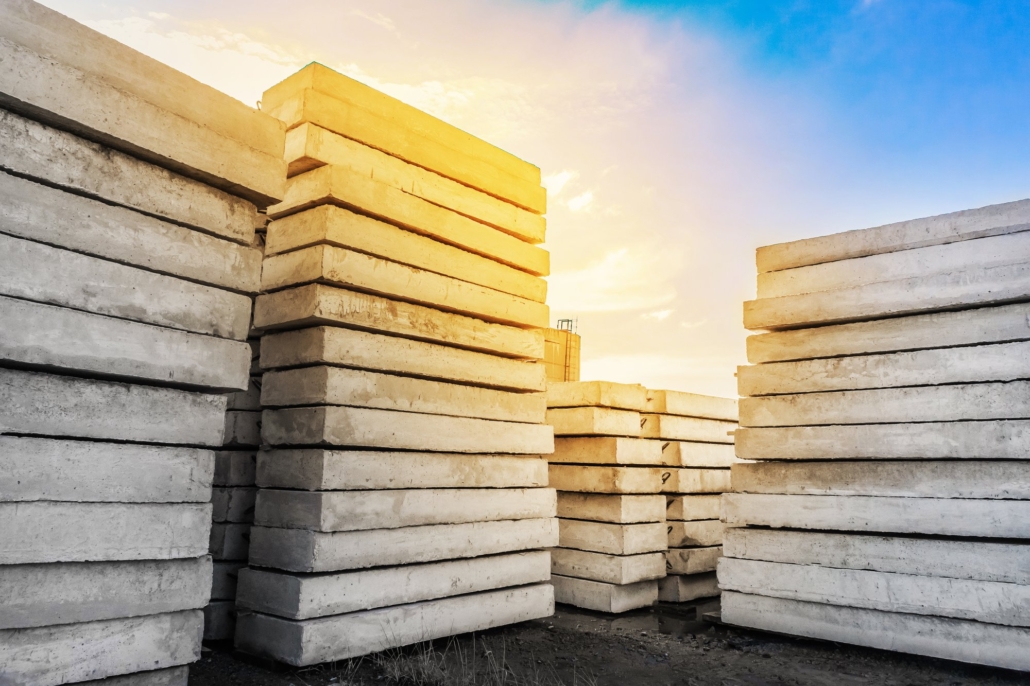
Unlike traditional construction methods, where concrete is poured and cured on-site, precast concrete components are manufactured in controlled facilities before transportation to project locations. This fundamental shift in methodology has reshaped how America builds its bridges, utilities, coastal defenses, and energy infrastructure, delivering projects faster while maintaining rigorous quality standards.

Understanding Precast Concrete Manufacturing
The manufacturing process distinguishes precast concrete from conventional construction approaches. Production takes place in specialized facilities where environmental factors like temperature, humidity, and curing time remain constant. This controlled environment eliminates the unpredictability that often plagues jobsite casting, where rain delays, temperature fluctuations, and inconsistent mixing can compromise structural integrity.
During manufacturing, engineers precisely position steel reinforcement within custom molds designed to meet exact project specifications. Concrete is then poured, vibrated to eliminate air pockets, and allowed to cure under optimal conditions. Advanced monitoring systems track compressive strength development in real time, ensuring each component meets design requirements before leaving the facility. This level of quality control produces components with superior density, reduced porosity, and enhanced resistance to environmental stressors.
The precision achieved through factory production extends beyond structural performance. Dimensional accuracy improves dramatically when manufacturers cast components in reusable steel or fiberglass molds rather than when formed on-site. Tolerances measured in fractions of an inch become standard rather than exceptional, simplifying installation and reducing field adjustments that consume time and resources.
Strategic Advantages for Project Delivery
Speed transforms project economics in infrastructure development. By manufacturing components off-site while foundation and site preparation work progress simultaneously, precast concrete collapses traditional construction timelines. A bridge project that might require months of sequential on-site concrete work can instead receive pre-manufactured deck sections ready for installation within days. This parallel workflow reduces exposure to weather delays and allows contractors to optimize crew deployment across multiple project phases.
Durability considerations drive many infrastructure decisions, particularly for assets expected to serve communities for half a century or longer. Precast concrete's dense matrix and controlled curing process create a material highly resistant to freeze-thaw cycles, chemical exposure, and mechanical wear. Highway barriers manufactured with precast methods maintain structural integrity through decades of salt exposure and vehicle impacts. Utility vaults resist groundwater infiltration and soil pressure while protecting critical systems from environmental degradation.
The sustainability profile of precast concrete addresses growing environmental concerns in public works projects. Factory production enables precise batching that minimizes material waste, with excess concrete often recycled into aggregate for future batches. Energy efficiency improves through optimized curing processes and reduced transportation needs when mobile production units operate near project sites. The longevity of precast structures also contributes to sustainability by reducing replacement cycles and the associated carbon footprint of repeated reconstruction.
Infrastructure Applications Across Sectors
Transportation infrastructure consumes the largest share of precast concrete production. Highway projects utilize precast barriers, sound walls, and pavement panels that accelerate construction while minimizing disruption to traffic flow. Bridge construction has evolved dramatically with the adoption of precast deck panels, girders, and pier segments that arrive on-site ready for rapid assembly. Culverts and drainage structures manufactured as complete precast units install in hours rather than the days required for traditional cast-in-place methods.
Municipal water management systems increasingly rely on precast components to modernize aging infrastructure. Manholes, junction boxes, and pump stations manufactured to precise specifications ensure proper alignment and long-term watertight performance. Stormwater detention systems employ precast chambers and vaults that provide engineered storage capacity while simplifying installation in challenging urban environments where construction windows are limited and coordination with existing utilities is critical.
Energy infrastructure demands the reliability that precast concrete delivers. Wind turbine foundations must withstand enormous static and dynamic loads while maintaining precise alignment for turbine mounting. Precast foundation systems provide the necessary mass and stability while reducing on-site construction time in remote locations where weather windows are narrow. Electrical substations utilize precast equipment pads, cable trenches, and transformer containment structures that meet stringent performance standards while accelerating project commissioning.
Coastal protection has become increasingly urgent as communities confront erosion and rising water levels. Precast seawalls, revetment units, and breakwater armor provide engineered solutions that combine hydraulic performance with structural durability. These massive components often weigh several tons each and require the precision that only controlled manufacturing can deliver. The interlocking designs possible with precast concrete create flexible systems that absorb wave energy while maintaining structural integrity through storm events.

Mobile Manufacturing and Project-Specific Solutions
The evolution of mobile precast manufacturing has expanded possibilities for large-scale and remote projects. Temporary production facilities can be established near construction sites, dramatically reducing transportation costs and delivery lead times. This approach proves particularly valuable for highway corridor projects where hundreds of identical barrier or pavement sections are needed, or for coastal installations where massive armor units would be impractical to transport long distances.
Customization capabilities have advanced significantly with digital design tools and precision mold fabrication. Engineers specify complex geometries, embedded hardware, and specialized finishes that would be difficult or impossible to achieve through field casting. Three-dimensional modeling allows stakeholders to visualize components before production begins, reducing costly modifications during construction. Surface treatments ranging from architectural finishes to specialized coatings are integrated during manufacturing, eliminating additional field operations.
Quality Assurance and Performance Standards
Rigorous inspection protocols govern precast concrete manufacturing. Before any component leaves the production facility, it undergoes detailed evaluation of compressive strength through cylinder testing, dimensional accuracy verification, reinforcement placement confirmation, and surface finish inspection. This systematic approach catches potential issues before they reach the jobsite, where corrections become exponentially more expensive and disruptive.
Material testing extends beyond the concrete itself. Reinforcing steel receives certification for grade and yield strength. Embedded hardware undergoes load testing to verify connection capacity. Manufacturers also evaluate protective coatings for adhesion and coverage. This comprehensive quality program creates documentation trails that support project acceptance and provide baseline data for long-term performance monitoring.
The Future of Infrastructure Construction
Infrastructure needs continue expanding as existing systems age and populations grow. Precast concrete positions itself as an essential tool for meeting these challenges efficiently and sustainably. The combination of quality control, construction speed, and long-term durability aligns with both fiscal responsibility and environmental stewardship.
At Roman Stone, we bring decades of expertise in engineered precast concrete solutions for transportation, coastal protection, energy, and telecommunications infrastructure. Our mobile production capabilities allow us to establish manufacturing operations directly at your project site, reducing delivery times and transportation costs while maintaining the highest quality standards.
With comprehensive certifications and a track record of successful installations across diverse applications, our team collaborates with you from initial design consultation through final installation. We understand the complexities of regional regulations, site-specific challenges, and the demanding timelines that define modern infrastructure projects.
Connect with us to explore how our custom manufacturing solutions and technical expertise can help deliver your project on time and within budget.

