sustainable construction using concrete

Concrete vs. the Alternatives: A Per-Unit Emissions Breakdown for Infrastructure Builders

When infrastructure builders evaluate sustainable construction, one question keeps surfacing: which material actually carries the lightest carbon load? Concrete is everywhere, covering roads, tunnels, utility vaults, and bridges, and it draws heavy scrutiny for its emissions. However, the comparison is usually misunderstood. A realistic evaluation of concrete's footprint against materials such as steel, plastic, and mass timber requires a per-unit, full-lifecycle lens.

How We Measure Concrete's Emissions

Carbon accounting for construction materials relies on embodied carbon: the total greenhouse gas emissions tied to extraction, manufacturing, transport, and end-of-life disposal. The construction sector accounts for roughly 37-39% of global energy-related CO2 emissions, with material production alone responsible for 7-11% of that share.

sustainable construction using concrete

Concrete's main culprit is cement. The calcination process that produces clinker, the core ingredient in Portland cement, releases CO2 as a chemical byproduct, not just a fuel byproduct. That distinction makes it harder to address than simple energy efficiency improvements.

​Sustainable Construction: Concrete vs. Plastic and HDPE

High-density polyethylene (HDPE) and plastic conduit systems are commonly pitched as lightweight, corrosion-resistant alternatives for underground utility systems. Their manufacturing footprint looks smaller at first glance, however, the full lifecycle picture is more complicated.

Key considerations include:

  • Plastics are petroleum-derived, tying their carbon profile directly to fossil fuel extraction and refining.
  • HDPE lacks the compressive load-bearing capacity of concrete, requiring more support infrastructure in heavy-load applications.
  • Plastic degrades under UV exposure and ground movement, increasing replacement frequency and cumulative emissions over time.
  • Concrete's longevity, often 50-100+ years in underground applications, distributes its upfront carbon cost across a much longer service window.

For buried utility systems, concrete's durability frequently makes it the lower-carbon choice when measured across the full service life.

​Sustainable Construction: Concrete vs. Mass Timber

Mass timber has earned real attention as a lower-carbon structural option. A comparative lifecycle assessment found that timber buildings achieve roughly a 25% reduction in global warming potential compared to concrete counterparts. Wood products carry lower embodied energy because they skip the extreme heat processing that cement production demands.

That said, mass timber has real limitations for infrastructure applications. It is not suited for underground, submerged, or high-humidity environments. Fire resistance, moisture management, and load capacity require additional treatment and structural systems. Local sourcing also matters significantly, since long transport chains erode timber's carbon advantage. Mass timber is best suited for above-grade structural frames in buildings, not utility infrastructure, marine environments, or buried systems.

Where Precast Concrete Changes the Equation

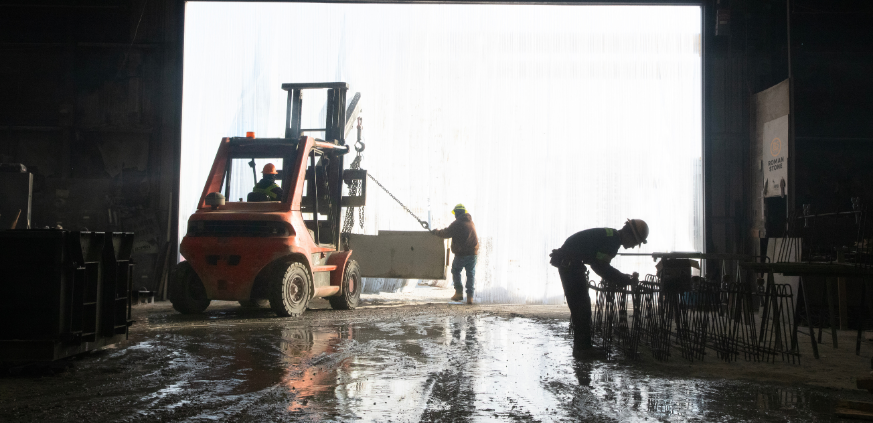
Not all concrete carries the same emissions profile. Precast concrete, manufactured in a controlled plant environment, performs meaningfully better than site-poured cast-in-place work. The reasons are measurable:

  • Optimized mix designs reduce cement content per unit without sacrificing strength.
  • Plant production generates less material waste than field pours.
  • Faster installation cuts equipment hours on site, reducing fuel burn.
  • Reusable steel forms replace single-use lumber or plywood, eliminating formwork waste.
  • Fewer site visits and deliveries compress construction schedules and associated emissions.

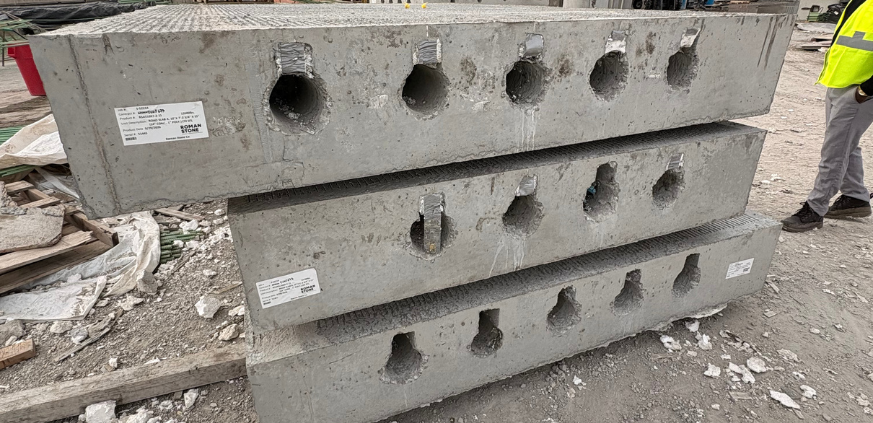
Roman Stone's EZ-Key duct bank system illustrates this approach. Precision-manufactured off-site, it reduces field labor, minimizes rework, and compresses installation timelines, making it a strong candidate for projects prioritizing sustainable construction outcomes.

What the Industry Is Doing to Reduce Concrete's Carbon Load

The concrete industry is actively cutting emissions at scale. Current strategies include:

  • Replacing a portion of Portland cement with supplementary cementitious materials (SCMs) like fly ash and blast furnace slag
  • Adopting Portland-limestone cement blends that emit roughly 10% less CO2
  • Switching to waste-derived kiln fuels such as biomass and used tires.

Producers are also injecting captured CO2 into concrete during curing to permanently store carbon in the finished product. Hardened concrete also naturally reabsorbs CO2 over time through carbonation, partially offsetting production emissions.

Every Material Specification Is a Carbon Decision

Infrastructure builders make carbon decisions whether they intend to or not. Every specification carries a lifecycle emissions number. For underground, coastal, and mission-critical utility applications, concrete's durability and load performance make its per-unit emissions competitive over time. Precast narrows that gap further, and advances in mix design and SCMs continue to push the number down.

Sustainable construction does not require abandoning concrete. It requires specifying the right concrete, made the right way, for the right application. Connect with a Roman Stone precast specialist to understand how mix design and manufacturing approach can move your next project toward a lower-carbon outcome.


Frequently Asked Questions

Q: Does precast concrete produce fewer emissions than cast-in-place concrete?

Generally, yes. Precast manufacturing in a controlled plant environment allows for optimized mix designs, tighter quality control, reduced material waste, and more consistent curing. Reduced on-site construction activity also lowers construction-phase emissions.

Q: How do I compare the carbon footprint of concrete against other materials for a specific project?

The most reliable approach is to obtain Environmental Product Declarations (EPDs) for the materials under consideration and compare them on a per-functional-unit basis rather than a per-kilogram basis.

Q: What is Roman Stone doing to reduce the embodied carbon of its precast products?

By utilizing an NPCA-certified facility to remove inefficiencies and material waste, Roman Stone ensures lower per-unit carbon impacts. Furthermore, the company refines its mix designs to lower cement requirements without sacrificing structural integrity, integrating supplementary cementitious materials as needed to meet performance standards.

precast concrete vaults

Underground Infrastructure: The Complete Guide to Precast Concrete Vaults

​Modern infrastructure depends on invisible systems—and increasingly, on the engineering solutions that enable them. Beneath roads, utilities, and facilities lies a critical network of underground conduits, chambers, and access points. Precast concrete vaults form the structural backbone of this subsurface ecosystem, serving as engineered solutions for cable management, utility distribution, equipment housing, and maintenance access across telecommunications, power, water, and transportation sectors.

These systems must balance competing demands: load-bearing capacity for surface traffic, corrosion resistance in demanding environments, dimensional precision for tight installation windows, and lifecycle durability measured in decades. For infrastructure planners, engineers, and delivery teams, precast concrete vaults represent both a technical specification and a strategic decision that affects project cost, schedule, and long-term operational reliability.

Understanding Precast Concrete Vaults

Vaults are engineered to house and protect underground systems. These include electrical transformers, circuit breakers, telecommunications hardware, and control panels. They also function as access points for inspection and upkeep of buried utilities.

The production process follows strict industry standards. Most vaults conform to ASTM C857 and C858. These specifications govern underground precast concrete utility structures. Each unit must satisfy load, strength, and durability requirements before it reaches a job site.

Where Precast Concrete Vaults Are Used

Precast concrete vaults serve a wide range of infrastructure sectors. Their adaptability makes them a go-to solution across both public and private projects.

Common applications include:

  • Electrical and utility systems. Housing transformers, switchgear, and circuit protection components
  • Telecommunications and data networks. Protecting fiber optic cables, pull boxes, and splice connections
  • Water and wastewater systems. Enclosing valve assemblies, meters, and flow control mechanisms
  • Transportation projects. Supporting signal systems, lighting controls, and drainage infrastructure
  • Data centers and mission-critical facilities. Providing secure enclosures for high-value electrical systems
  • Coastal and marine environments. Withstanding hydrostatic pressure and saltwater exposure
this is an image of precast concrete vaults

Why Precast Outperforms Cast-in-Place Concrete

The comparison between precast and cast-in-place concrete comes up on nearly every infrastructure project. For underground vault applications, precast consistently delivers superior outcomes.

Quality control is one significant advantage. Precast vaults are cast in climate-controlled facilities. Trained crews monitor every mix, pour, and cure cycle. The result is consistent concrete strength, typically 4,000 to 5,000 psi, across every unit produced.

Weather is a major source of delays on any job site. Cast-in-place concrete requires favorable conditions for adequate curing. Precast eliminates that variable entirely. Units arrive ready to install, regardless of on-site weather.

Installation is also far more efficient. Crews can set a precast vault in a fraction of the time needed to form and pour one in place. This reduces labor hours and shortens the schedule on time-sensitive builds.

Precast concrete also strengthens over time. Unlike other material options, it does not corrode in groundwater environments. This durability makes it well-suited for below-grade installations where moisture is a constant concern.

Key Design and Installation Factors

Getting the most from a precast vault starts long before it arrives on site. Attentive planning and sound installation practice are both essential to long-term performance.

Structural loading must be assessed early. Vaults installed beneath roadways or parking areas face traffic loads far beyond those in pedestrian zones. The design must account for both dead loads and dynamic forces.

Access and clearance requirements influence vault sizing and configuration. Maintenance crews need sufficient space to inspect hardware, replace components, and exit safely. Ladders, hatches, and fall protection must all factor into the specification.

Sealing and waterproofing are non-negotiable. Joints between vault sections, conduit penetrations, and lid connections are all potential entry points for water. Thorough treatment at every interface prevents infiltration and protects sensitive systems.

Future adaptability should also inform the specification. Infrastructure needs evolve. A vault that can accommodate upgraded systems or additional conduit entries will deliver greater value over its service life than one sized only for present demands.

Partnering With Roman Stone for Underground Vault Solutions

Precast concrete vaults represent a mature, proven technology—yet their performance depends entirely on quality of manufacture, proper installation, and site-specific engineering. Whether you're specifying vaults for utility distribution, telecommunications infrastructure, or transportation systems, the decision to invest in precast solutions pays dividends through accelerated construction schedules, consistent quality control, and predictable long-term durability.

The real competitive advantage lies not just in the product, but in partnering with manufacturers who understand your project's constraints: load requirements, environmental conditions, dimensional tolerances, and delivery logistics. A vault that arrives on schedule, fits with minimal field modifications, and performs reliably for 50+ years transforms project economics.

Ready to integrate precast concrete vaults into your next infrastructure project? Roman Stone brings over a century of engineering expertise and proven manufacturing capability to utility, telecommunications, and transportation applications. Whether you're planning specifications, evaluating vendors, or troubleshooting installation challenges, our team can help you optimize performance and cost.

Let’s connect to discuss your vault requirements and discover how precast solutions can accelerate your project timeline while ensuring long-term reliability.


Frequently Asked Questions

What is the difference between a utility vault and a manhole?

A utility vault is a larger enclosure designed to house equipment such as transformers, switchgear, or telecommunications hardware. A manhole is a smaller access structure that provides entry to underground conduits or pipelines. Vaults prioritize interior working space; manholes prioritize passage.

How long do precast concrete vaults typically last?

With proper installation and maintenance, precast concrete vaults can last 100 years or more. Concrete gains strength over time, and its resistance to moisture and corrosion makes it one of the most durable materials for below-grade applications.

Can precast concrete vaults be customized for non-standard projects?

Yes. Precast manufacturers can adjust dimensions, wall thickness, reinforcement layouts, penetration locations, and lid configurations to meet specific project needs. Custom designs are common in mission-critical, coastal, and high-load traffic environments.

Environmental Product Declarations (EPDs): What Construction Professionals Need to Know cover

Environmental Product Declarations (EPDs): What Construction Professionals Need to Know

​In a time where sustainability and transparency define project success, the construction industry is rapidly shifting its focus toward quantifiable environmental performance. Gone are the days when environmental claims could rely solely on general marketing statements; today, project owners, regulators, and specifiers demand verified, data-driven insights. At the heart of this transformation lies Environmental Product Declarations (EPD).

As EPDs become a standard prerequisite for everything from LEED certification to public infrastructure projects, understanding how to interpret and leverage them has become an essential skill for modern construction professionals. This guide provides a clear roadmap to understanding EPDs: what they are, why they are becoming indispensable, and how they can be used to make more informed, sustainable procurement decisions.

What Are Environmental Product Declarations?

Standardized and verified by third party agencies, an Environmental Product Declaration details the environmental impact of a product throughout its entire life cycle. Much like a nutrition label on food, an EPD doesn't judge a product as "good" or "bad"; instead, it provides transparent data regarding its environmental footprint.

Environmental Product Declarations

These documents are based on comprehensive Life Cycle Assessments (LCA) that adhere to ISO 14040 and 14044 standards. While the EPD acts as a clear, public summary of these complex evaluations, the process is designed so that manufacturers do not have to disclose any proprietary commercial information.

What an EPD Contains

Each Environmental Product Declaration reports a specific set of impact categories derived from a full LCA:

  • Global Warming Potential (GWP): Embodied carbon emissions across the product lifecycle
  • Resource consumption: Energy, water, and raw materials used during production
  • Emissions to air, water, and soil: Pollutants released during manufacturing and use
  • Waste generation: Solid and hazardous waste produced

EPDs follow Product Category Rules (PCRs), which are standardized guidelines specific to each product type. This ensures that declarations within the same category use the same methodology, making meaningful comparison possible.

Why EPDs Matter More Than Ever

Demand for EPDs now comes from multiple directions at once. Green building certification programs like LEED and BREEAM directly require or reward products that carry them. In Europe, EPDs connect to regulatory frameworks including the Construction Products Regulation and the Energy Performance of Buildings Directive. In the United States, federal procurement and public infrastructure programs increasingly build EPD requirements into material specifications.

Key drivers pushing EPDs to the forefront include:

  • Growing regulatory mandates at federal, state, and municipal levels
  • LEED v4 and BREEAM credits tied directly to EPD submission
  • Pressure from project owners to quantify and reduce embodied carbon
  • Greater transparency expectations across the entire supply chain

Specifying products without EPDs is becoming harder to justify on high-profile builds.

Environmental Product Declarations and Precast Concrete

Within the Environmental Product Declaration framework, precast concrete is exceptionally well-aligned. The Precast/Prestressed Concrete Institute (PCI) has published industry-wide, cradle-to-gate EPDs for architectural, insulated, and structural precast products, covering lifecycle stages from raw material extraction through manufacturing.

Since manufacturers produce precast products in controlled plant environments, production data stays more consistent and is easier to document. That makes LCA data more reliable and EPDs more defensible during specification review. One important rule: only compare precast product EPDs that share the same PCR and functional unit. Cross-category comparisons produce misleading conclusions.

EPDs as a Competitive Differentiator

Manufacturers with published Environmental Product Declarations hold a measurable edge during procurement. Specifiers and project owners can evaluate environmental claims with real data rather than marketing language, which fundamentally changes how they make purchasing decisions.

For contractors and project teams, sourcing materials with EPDs also supports project-level sustainability goals. Teams can model total embodied carbon, identify where reductions are possible, and demonstrate environmental performance to clients and regulators.

Common Misconceptions

Several enduring fallacies continue to hinder the widespread integration of Environmental Product Declarations:

  • An EPD means the product is eco-friendly. Not true. An EPD reports impact data. It does not certify that a product outperforms other alternatives.
  • All EPDs are comparable. Only EPDs developed under the same PCR and functional unit are valid for comparison.
  • EPDs are just marketing. Every EPD undergoes independent third-party verification before publication. The process is rigorous and standardized.
  • EPDs only matter for green building projects. As regulations evolve, EPDs are becoming a baseline requirement across many project types, including state and federally-funded infrastructure, not just commercial and industrial.

Work With a Manufacturer Who Takes Documentation Seriously

When environmental accountability is part of the conversation, the materials you use need to back up your commitments. Choosing a precast partner with the documentation, manufacturing discipline, and technical expertise to support that process matters.

Roman Stone has spent over a century helping contractors and infrastructure teams deliver complex projects with confidence.

Roman Stone’s EZ-Key™ product line, which includes duct banks and vaults, was specifically designed for data centers, airports, and other major infrastructure projects to address critical challenges in meeting environmental performance standards. The EZ-Key™ line comes with advanced, sustainable options already baked in. This includes special fiber reinforcement that eliminates all steel rebar and the option for a concrete mix with significant carbon offsets, moving beyond carbon neutrality to actively benefit the environment.

The new patent-pending EZ-Key™ system represents a fundamental shift in construction, offering unparalleled cost savings, speed, simplicity, reliability, and a path to greener building practices. Get in touch or view the EZ-Key™ product flyer here.


Frequently Asked Questions

What is the difference between an EPD and a sustainability certification?

An EPD reports measured lifecycle environmental data for a specific product. A sustainability certification, such as Cradle to Cradle or a green building label, evaluates a product or building against a defined set of criteria and awards a pass or rating. EPDs provide inputs that can support certification processes, but the two are distinct tools.

Do EPDs expire?

Yes. EPDs typically carry a validity period of five years. After that, manufacturers must update the underlying LCA data and resubmit for third-party verification to keep the declaration current. Buyers should confirm that any EPD they reference reflects current manufacturing conditions.

Are EPDs required on public infrastructure projects?

Requirements vary by jurisdiction and project type, but the trend runs clearly toward broader mandates. Several states and federal programs now require or strongly incentivize EPDs for materials like structural steel, concrete, and asphalt on publicly funded projects.

Precast Concrete Engineering in Rail Infrastructure cover

Precast Concrete Engineering in Rail Infrastructure

​Rail infrastructure is one of the most demanding construction environments in civil engineering. Projects must hit strict dimensional tolerances. They must also endure heavy loads, high use frequency, and extended weather exposure. The engineering decisions made early in a rail project directly shape long-term performance and cost. Precast concrete has become a central solution in this space.

Precast solutions offer a combination of precision, durability, and schedule efficiency that on-site methods cannot always match. Understanding how different precast products function across different rail applications helps contractors and engineers make better decisions at every project phase.

precast concrete for railway infrastructure

Elevated Structures and Urban Transit Guideways

Rail networks in urban areas often run elevated above street level. Elevated guideways and metro viaducts require robust, lightweight structural components. Precast concrete segmental construction has become the preferred method for these structures.

Precast segmental technology offers several advantages for elevated transit builds:

  • A dedicated production facility casts the segments, ensuring uniform quality before field installation.
  • Precast construction minimizes on-site labor requirements, which matters greatly on congested urban corridors.
  • Erection can proceed quickly, limiting disruption to traffic and communities below.​
  • Inspectors can inspect completed segments before they reach the structure, allowing them to identify and address defects early.

Metro projects around the world have leveraged this approach with notable results. In one urban metro build, precast construction cut the working footprint in half compared to cast-in-place methods. This was critical in areas with tight alignments and heavy transit schedules.

Tunnel Linings and Underground Rail Infrastructure

Underground rail construction presents a different set of challenges. Tunnel boring machines (TBMs) excavate the alignment, and the bore must be lined immediately behind the cutterhead. Precast concrete segmental liners serve this purpose.

Each lining ring consists of multiple curved segments. Together, they form a closed, watertight circle. The segments are cast offsite and delivered to the tunnel face in a precise sequence. Installation is fast and continuous. This keeps the TBM advancing without interruption.

precast concrete for railway infrastructure

The geometry of each segment is engineered to accommodate alignment curves, groundwater pressure, and soil loads. Segments are designed and tested before the tunnel drive begins. Issues identified during fabrication can be corrected before the segment enters the ground. This is a notable benefit compared to cast-in-place lining methods, where underground repairs are costly and technically complex.

Station Platforms and Rail Passenger Facilities

Rail stations face a unique constraint: construction must often take place within limited track possession windows. These windows are typically overnight and span only a few hours. Traditional cast-in-place methods cannot meet that pace.

Precast concrete platform components are designed for rapid deployment. Modular units can be set and secured within a single overnight possession. Some systems enable up to 50 meters of platform construction per nightly window. Comparable work using conventional approaches could take several weeks.

This speed advantage extends to other station elements as well:

  • Canopy columns, beam frames, and staircase components can all be manufactured at the plant and delivered ready to install.
  • Structural elements arrive on site with no waiting period for curing, keeping the schedule tight.
  • Reduced site activity lowers risk to workers and limits interference with live rail operations.

Factory production also improves finished surface quality. Tighter curing control is achievable in a plant setting. This produces denser, more durable concrete that holds up to daily passenger traffic and routine maintenance.​

Roman Stone: Precast Concrete Built for Rail Infrastructure Demands

Rail projects demand a precast supplier with more than a catalog of standard products. Engineering collaboration, scheduling reliability, and manufacturing precision all determine whether a project reaches its goals. Roman Stone brings over a century of precast manufacturing experience to infrastructure teams facing exactly these pressures.

Roman Stone's capabilities span underground structures, elevated guideway systems, and specialized civil components. Each application is approached with the same discipline: precision manufacturing, responsive service, and a commitment to schedule certainty.

When rail timelines are tight and specifications are demanding, having the right precast partner makes a measurable difference. Reach out to the Roman Stone team today to discuss how precast solutions can support your next rail infrastructure project.


FAQ

How Does Precast Concrete Support Sustainability Goals in Rail Construction?

Precise factory batching reduces on-site material waste considerably. Optimized component designs also achieve the same structural output with less material volume. Shorter construction timelines mean fewer equipment hours on the project site, which lowers the carbon output associated with the build.

Can Precast Concrete Components Be Adapted for Non-Standard Rail Geometries?

Yes. Curves, varying span lengths, and irregular site conditions can all be addressed through engineering-driven customization. Manufacturers work from detailed drawings to produce elements tailored to specific alignment requirements, load conditions, and dimensional tolerances. Custom molds and prestressing configurations make this level of adaptation achievable within standard production workflows.

Stormwater Management: Using Precast to Reduce Run-off & Increase Stormwater Quality cover

Stormwater Management: Using Precast to Reduce Run-off & Increase Stormwater Quality

​Urban development is reshaping the landscape at a rapid pace. As cities expand, natural surfaces give way to roads, parking lots, and rooftops. These hard surfaces prevent rainwater from soaking into the ground. Instead, water rushes across the built environment, gathering pollutants as it moves. This is where stormwater management becomes essential.

Handling runoff is no longer just about flood control. It also means protecting water quality, preserving critical infrastructure, and satisfying increasingly strict environmental regulations. Precast concrete has become a leading solution in this space. Precast systems reduce runoff volume and improve the condition of water before it reaches local waterways.

The Problem With Urban Runoff in Stormwater Management

When rain falls on impervious surfaces, it collects sediment, heavy metals, oils, and nutrients. That contaminated runoff flows directly into streams, rivers, and lakes. Without treatment, it degrades aquatic ecosystems and introduces serious public health risks.

stormwater management

The U.S. Environmental Protection Agency governs stormwater discharges through the National Pollutant Discharge Elimination System (NPDES) permit program. Municipalities and construction sites must meet strict permitting requirements. Non-compliance can result in fines and costly project delays.

Climate change has added pressure to an already difficult stormwater management challenge. Extreme rainfall events are growing more frequent. Many drainage networks are undersized for the surge in water volume these events generate. Aging systems overflow, releasing untreated flow into waterways. Resilient, upgraded stormwater infrastructure has become a necessity, not an option.

How Precast Systems Control Runoff Volume

Precast concrete addresses runoff through three core mechanisms: detention, retention, and infiltration. Each plays a distinct role in a thorough stormwater plan.

  • Detention temporarily holds excess stormwater and releases it at a controlled rate, reducing the peak flow that enters downstream drainage networks.
  • Retention stores water on-site for beneficial reuse, such as landscape irrigation, keeping it out of the drainage system entirely.
  • Infiltration allows water to percolate gradually into the soil, replenishing groundwater reserves and cutting total runoff volume.

Precast concrete modules are fabricated in controlled manufacturing environments. They arrive at the project site ready for installation. This approach shortens construction schedules and limits the period during which sites are vulnerable to erosion.

Precast Structures and Water Quality Treatment

Reducing runoff volume addresses one dimension of the problem. The quality of the water moving through these systems matters just as much.

Precast concrete structures can function as treatment components within a stormwater network. Catch basins and inlet structures capture surface flow early. They can be fitted to separate sediment and debris before water enters the main drainage system. Diversion weirs and junction boxes route flow toward dedicated treatment areas. Precast vaults with filtration chambers remove contaminants such as oils, heavy metals, and excess nutrients.

These systems are especially valuable near sensitive ecological zones. They help maintain the health of receiving waters and support compliance with water quality standards.

Durability, Precision, and Long-Term Reliability in Stormwater Management

Precast concrete is engineered for longevity. Its compressive strength increases over time. Plastic alternatives, in contrast, degrade under sustained loads and pressure. Underground stormwater installations face constant demands from traffic, soil weight, and construction activity above them. Reinforced concrete structures are purpose-built to absorb these forces reliably.

Long-term maintenance is also straightforward with precast systems. Most designs include integrated manhole access points. Crews can inspect and clean the interior without excavating the ground around them. This lowers operational costs over the life of the installation and preserves hydraulic efficiency.

Each precast component is manufactured to precise specifications. Production happens in a controlled facility, eliminating the variability inherent in cast-in-place concrete. That consistency results in fewer field complications and more predictable outcomes across decades of service.

Delivering Stormwater Solutions When Schedules Are Tight

Infrastructure teams facing compressed timelines need stormwater systems that work from day one. Shifting production off the jobsite reduces weather-related delays and lowers labor requirements on-site. That translates directly into schedule certainty and lower execution risk.

Roman Stone partners with contractors, utilities, and public agencies to deliver precast stormwater solutions for demanding infrastructure projects. Our engineering capability supports standard detention systems as well as custom-designed treatment structures. Every component leaves the facility already satisfying the structural and hydraulic requirements of the project.

Whether the work involves urban drainage upgrades, mission-critical site development, or coastal construction, Roman Stone helps project teams stay on schedule. Components arrive ready to place, supporting long-term system performance from installation day forward.

Reach out to Roman Stone today to discuss your project's stormwater infrastructure requirements and discover how precast can strengthen your next build.


Frequently Asked Questions

What types of pollutants does stormwater runoff typically carry?

Urban stormwater runoff commonly carries sediment, oils, grease, pesticides, heavy metals, and excess nutrients such as nitrogen and phosphorus. These contaminants accumulate on impervious surfaces between rain events and are washed into waterways when storms occur.

What is Low Impact Development (LID), and how does precast support it?

Low Impact Development is a design approach that mimics natural hydrology. It aims to manage runoff as close to the source as possible. Precast infiltration and retention systems align directly with LID principles, supporting groundwater recharge and on-site water management goals.

Are precast stormwater systems suitable for sites with high traffic loading?

Yes. Precast concrete stormwater vaults and storage systems are engineered to handle significant traffic and soil loads. Most are available in traffic-rated configurations, making them appropriate for installation beneath parking lots, roadways, and other high-load environments.

precast concrete

Quality Assurance: What to Look for in Your Infrastructure Product Supplier

​Quality assurance is not just a factory checklist. It is a system that runs from raw materials to final delivery. Infrastructure projects carry significant risk. Delays, material failures, and poor coordination cost teams time and money. For contractors and public agencies, working with precast concrete demands careful supplier evaluation.

Knowing what to look for can make the difference between a smooth build and a costly setback. This guide breaks down the key factors to consider when choosing a dependable infrastructure product supplier.

Certifications and Standards: The Baseline of Quality for Precast Concrete

Industry certifications give project teams a good starting point. They confirm that a manufacturer has met a recognized standard for production and quality management. Look for suppliers certified by organizations like the Precast/Prestressed Concrete Institute (PCI) or the National Precast Concrete Association (NPCA). These bodies require regular plant audits and strict adherence to established protocols.

Certifications, however, are not the finish line. They represent a floor, not a ceiling. A certified supplier confirms compliance. A great supplier goes further. Robust QA practices include detailed documentation, material traceability, and internal testing that exceed minimum requirements.

Dig deeper than the certificate on the wall. Find out how often internal audits are conducted. Check whether the facility tracks non-conformance rates over time. These details reveal a culture of quality, not just a credential.

Engineering Capability and Technical Support

Infrastructure projects rarely go exactly as planned. Designs change. Site conditions shift. Specifications get revised under tight timelines. A supplier with genuine engineering capability can adapt alongside your team.

Look for suppliers who employ licensed engineers and offer technical assistance beyond order fulfillment. Can they review shop drawings? Can they assist with design revisions? Do they understand the load requirements, soil conditions, and installation constraints specific to your project type?

This kind of involvement eases coordination during execution. It also helps identify issues in advance, before they become expensive field problems. A supplier that functions as a technical partner delivers real value for complex infrastructure work.

Precast concrete products must be designed with precision. Wall thickness, reinforcement placement, and joint tolerances all affect long-term structural performance. A supplier without capable engineering backing increases the risk of costly field corrections.

this is an image of precast concrete slabs

Manufacturing Controls and Process Consistency

Product quality does not happen by accident. It is the result of disciplined methods, applied consistently. When evaluating a supplier, look closely at how their facility operates.

Key manufacturing controls to assess include:

  • Raw material testing and traceability from source to finished product
  • Documented curing procedures and environmental controls during production
  • Inspection checkpoints at each stage of fabrication
  • Non-conformance reporting and corrective action procedures
  • Independent third-party testing and verification protocols

Consistency matters as much as initial quality. A supplier that performs well on the first batch must replicate that standard across every order. Look into their reject rates. See how they handle non-conforming products. These questions reveal how seriously a supplier takes operational discipline.

Production environment plays a significant role. A controlled manufacturing facility reduces exposure to weather delays, material variability, and labor inconsistencies. This is one reason infrastructure teams increasingly rely on off-site fabrication for time-sensitive components.

Reliable Precast Concrete Delivery and Supply Chain Transparency

A product that meets every quality standard still creates problems if it arrives late. Delivery reliability is a core element of supplier evaluation. It reflects how well a manufacturer plans, schedules, and communicates throughout the production and logistics workflow.

Evaluate a supplier's track record on lead times. Request references from past projects with similar scope and complexity. Find out how they respond to schedule changes or material shortages.

Supply chain transparency is equally critical. Disruptions happen. What matters is how a supplier communicates when they do. A dependable partner provides advance notice, proposes alternatives, and works collaboratively to protect your schedule.

Logistics coordination is another factor to consider. Does the supplier have experience delivering to constrained urban sites, staged jobsites, or phased construction programs? Delivery is not just transportation, it is sequencing, planning, and communication across multiple stakeholders.

Roman Stone: A Partner Built Around Infrastructure Quality

Roman Stone has supported contractors, utilities, and public agencies for more than a century. Our precast concrete manufacturing process combines rigorous quality standards with experienced engineering expertise. Every product is built in a controlled facility, reducing field variability and improving schedule certainty.

Our team engages with project stakeholders from the beginning. This approach means identifying challenges before they become delays. From duct banks and underground utility systems to coastal and marine infrastructure, Roman Stone delivers solutions designed to perform under real-world conditions.

When timelines are tight and execution risk is high, selecting the right supplier is a strategic decision. Work with a precast concrete manufacturer that has the certifications, engineering depth, and delivery history your project demands. Connect with Roman Stone today to explore how our quality-driven approach can advance your next infrastructure project.


Frequently Asked Questions

How does a precast concrete manufacturer's plant capacity affect project timelines?

Plant capacity influences how quickly a supplier can respond to order changes or increased demand. A facility with adequate throughput can absorb schedule shifts without compromising lead times or product consistency. It is worth checking the current production load and average fulfillment timelines before signing a contract.

What is the difference between quality control and quality assurance in manufacturing?

Quality control refers to the inspection of finished products to identify defects. Quality assurance is the broader system of processes designed to prevent defects from occurring in the first place. Both are necessary in a well-run manufacturing operation, and the strongest suppliers invest in each equally.

Sustainable Construction: How Precast Products Reduce Environmental Impact cover

Sustainable Construction: How Precast Products Reduce Environmental Impact

​The construction industry ranks among the largest contributors to global carbon emissions. It accounts for nearly 40% of total worldwide emissions (UNEP). That figure covers both operational energy use and the carbon embedded in material production. Sustainable construction is no longer a trend or a marketing phrase. It has become a standard the entire industry must meet.

Precast concrete has emerged as a powerful tool for lowering construction's environmental footprint. Manufactured off-site in controlled factory settings, precast products offer distinct benefits over traditional on-site methods. Understanding those benefits helps contractors, engineers, and project owners make smarter, more responsible decisions.

The Environmental Cost of Conventional vs Sustainable Construction

Traditional on-site construction is resource-intensive. Workers mix and pour concrete in open-air conditions, often generating more material than a project requires. Delivery sequencing problems, unexpected delays, and shifting weather lead to wasted batches of ready-mix concrete.

​Material overuse sends enormous volume to landfills each year. Equipment runs longer to compensate for inefficiencies. Fuel consumption rises.

These are not isolated incidents. The global construction sector produces an estimated 2 billion tons of construction and demolition waste annually. That figure accounts for roughly one-third of all solid waste generated worldwide. A substantial portion traces directly back to avoidable overproduction and poor resource management.

Sustainable construction

How Precast Production Cuts Waste and Emissions

Precast manufacturing takes place in quality controlled facilities. This production environment creates measurable improvements in both material efficiency and emissions output.

Precise measurements prevent overuse. Excess material gets recycled back into the production cycle rather than discarded. Weather-related delays that trigger wasted batches are no longer a variable. Every component is manufactured to specification before it reaches the project site.

Water usage is also lower in controlled settings. Precast facilities don't need additional water to protect fresh concrete from heat or rapid drying. That is a meaningful difference in high-temperature or arid climates where on-site pours routinely require excess water throughout the curing process.

Durability, Longevity, and the Full Lifecycle Advantage

Sustainability isn't only about what goes into a material. It is also about how long that material continues to perform.

Precast concrete is engineered for extended service life. Its structural density and factory-cured strength make it highly resistant to weathering, freeze-thaw cycles, and heavy load requirements. A longer-lasting component means fewer repairs, fewer replacements, and less cumulative resource consumption over time.

This is where the lifecycle perspective becomes particularly compelling. A structure that performs reliably for decades carries a far smaller environmental footprint than one requiring frequent intervention. Precast elements can also be designed for disassembly. Rather than demolition and disposal, components can be relocated or repurposed at the end of a project phase. This reduces demand for new raw materials and limits solid waste generation.

​Thermal mass adds another layer of long-term value. Concrete absorbs and releases heat gradually. This characteristic helps regulate interior temperatures, cutting mechanical system loads and lowering operational energy use throughout a structure's working life.

Supporting Green Standards and Certification Goals for Sustainable Construction

Many infrastructure and building projects are now measured against formal sustainable construction benchmarks. LEED certification is among the most widely recognized. Precast concrete contributes to multiple credit categories within these rating frameworks. This makes it a strong fit for teams with green project targets.

Here are the primary areas where precast products align with established certification requirements:

  • Reduced site disturbance. Precast limits on-site activity, minimizing soil disruption and stormwater runoff.
  • Recycled content. Many manufacturers incorporate fly ash, slag, or recycled aggregates into mix designs, lowering embodied carbon in the finished product.
  • Indoor environmental quality. Concrete's natural density provides effective sound attenuation and supports healthier interior conditions.
  • Energy performance. Thermal mass properties help structures meet recognized energy efficiency targets.
  • Materials and resources. Factory precision reduces jobsite waste and keeps pollutants out of the surrounding environment.

Teams pursuing LEED, BREEAM, or similar ratings also benefit from the traceable production data that factory manufacturing provides. Every batch is monitored. Each mix is documented. That level of accountability supports the rigorous verification these programs require.

Specifying precast also streamlines the documentation process. Manufacturers produce consistent, testable components with known performance profiles. That predictability simplifies the reporting work that certification requires.

Sustainable construction

Building Greener Infrastructure With a Trusted Precast Partner

Infrastructure teams face tight schedules, labor constraints, and growing environmental accountability. The choice of a precast partner directly shapes project outcomes. The sustainability benefits of precast concrete only fully translate when manufacturing quality, engineering precision, and responsive coordination come together.

Roman Stone has spent more than a century helping contractors, utilities, and public agencies deliver complex infrastructure projects. Our manufacturing approach is grounded in principles that make precast a genuinely responsible choice. We prioritize precision, controlled production, and the reduction of variables that cause waste and rework on active sites.

Shifting critical work off the job site and into a controlled setting isn't just a scheduling benefit. It is an environmental one. Contact Roman Stone today to discuss how precast solutions can support your sustainability objectives and keep your timeline on track.


Sustainable Construction & Precast FAQs

Can precast concrete support net-zero building goals?

Yes. Precast contributes to net-zero targets in several ways. Manufacturers can integrate supplementary cementitious materials to lower embodied carbon. Its thermal mass properties also reduce operational energy demand over time. Roman Stone, for instance, now offers the entire EZ-KEY line with a special fiber reinforcement that eliminates steel rebar; as well as a carbon-negative concrete mix to support carbon neutrality intitiatives.

How does precast manufacturing affect air quality near project sites?

Controlled production significantly reduces on-site dust, diesel emissions, and particulate matter. Traditional construction requires extended equipment operation at the site, generating more localized air pollution. Precast minimizes the active footprint at the project location, which leads to cleaner conditions for workers and nearby communities alike.

What role does precast play in managing stormwater on construction sites?

Since precast components arrive ready to install, on-site grading and ground disturbance are kept to a minimum. Less disturbed soil means less erosion and sediment runoff into nearby waterways. Some precast products can also be engineered with permeable or drainage-integrated features to actively support stormwater management requirements on a completed project.

A bird is perched on the ledge of a building

Data Center Infrastructure: Precast Solutions for the Digital Age

Every streaming service, cloud application, and digital transaction depends on robust data center infrastructure operating behind the scenes. As the digital economy expands, these mission-critical facilities face mounting pressure to deliver uninterrupted performance while managing extraordinary power loads and thermal challenges. The U.S. Department of Energy projects that data centers will consume between 6.7 and 12% of the nation's electricity by 2028; a staggering figure that underscores why speed, efficiency, and structural resilience have become non-negotiable in facility design.

Traditional construction methods struggle to meet these accelerating demands. Weather delays, extended curing periods, and inconsistent quality control create bottlenecks that today’s developers can't afford. Precast concrete offers a compelling alternative, delivering factory-controlled precision, accelerated timelines, and superior performance characteristics that align with the realities of today's technology-driven landscape.

data center infrastructure

Why Precast Concrete Transforms Data Center Development

Manufacturing precast components in controlled environments and transporting them ready-to-install eliminates many obstacles that plague conventional building approaches. The advantages extend across multiple dimensions of project success.

Accelerated Deployment

Site preparation and component fabrication co-occur, compressing construction schedules dramatically. Teams install finished elements immediately upon delivery, allowing facilities to reach operational status months ahead of traditional timelines. When downtime translates directly to revenue loss, this speed advantage becomes financially decisive.

Uncompromising Structural Integrity

Digital assets demand protection from fire, moisture intrusion, and severe weather events. Precast concrete's inherent resistance to these threats maintains structural integrity across decades of service. Outages can easily cost providers from $100,000 to over $1 million. These figures make failure prevention paramount. Precast construction minimizes vulnerabilities that lead to catastrophic interruptions.

Thermal Performance and Energy Management

The concrete's thermal mass naturally regulates interior temperatures, reducing cooling system demands while maintaining the stable environments that servers require. This passive efficiency lowers operational expenses and shrinks environmental footprints, addressing both economic and sustainability imperatives in data center infrastructure planning.

Design Flexibility for Complex Requirements

Precast elements mold into diverse configurations that accommodate specialized electrical systems, cable management pathways, and equipment layouts. The modular nature of these components simplifies future expansions as storage demands grow, allowing facilities to scale without extensive structural modifications.

Environmental Responsibility

Factory production generates minimal waste compared to cast-in-place construction, with manufacturers routinely recycling excess material and effectively managing waste. This lean approach aligns with corporate sustainability commitments while reducing project costs.

The Performance Gap Between Construction Methods

Cast-in-place concrete remains weather-dependent, with rain delays and temperature constraints extending schedules unpredictably. Precast systems arrive immune to site conditions, maintaining momentum regardless of forecast. Reduced on-site labor requirements lower both expenses and safety risks, while installation predictability keeps budgets stable.

These operational advantages position precast as the preferred foundation for data center infrastructure, where reliability and speed determine competitive advantage. Precise factory assembly also supports cleaner layouts for critical systems (cabling, ductwork, and maintenance access), improving both safety protocols and long-term serviceability.

Engineering for Tomorrow's Digital Demands

Cloud computing, artificial intelligence, and edge computing applications continue driving explosive growth in data processing requirements. Facilities must expand capacity rapidly without compromising existing operations. Precast construction's modular framework integrates seamlessly with standing structures, enabling live expansions that traditional methods can't match. It also combines accelerated delivery, structural permanence, and environmental stewardship in a single proven system.

Roman Stone engineers precast components specifically for demanding digital environments; utility vaults, equipment foundations, and structural elements built to exacting tolerances. These purpose-designed products deliver the precision and durability that modern data center infrastructure requires across its operational lifespan.

Ready to Build Smarter? Whether you're planning a new facility or expanding existing capacity, Roman Stone delivers engineered precast solutions that eliminate construction risk while maximizing performance. Our team brings decades of expertise in mission-critical infrastructure to every project phase, from initial design consultation through final installation.

Discover how precast innovation can accelerate your next data center project. Get in touch to explore our complete portfolio and connect with engineering specialists who understand the unique demands of digital infrastructure.

Precast Concrete

​The Complete Guide to Precast Concrete for Infrastructure Projects

Infrastructure defines the backbone of modern civilization. From the highways connecting cities to the stormwater systems protecting communities, every component must withstand decades of use while adapting to evolving environmental challenges. Precast concrete has emerged as a transformative solution in this landscape, offering engineers and developers a material that combines precision manufacturing with field-proven durability.

Unlike traditional construction methods, where concrete is poured and cured on-site, precast concrete components are manufactured in controlled facilities before transportation to project locations. This fundamental shift in methodology has reshaped how America builds its bridges, utilities, coastal defenses, and energy infrastructure, delivering projects faster while maintaining rigorous quality standards.

precast concrete

Understanding Precast Concrete Manufacturing

The manufacturing process distinguishes precast concrete from conventional construction approaches. Production takes place in specialized facilities where environmental factors like temperature, humidity, and curing time remain constant. This controlled environment eliminates the unpredictability that often plagues jobsite casting, where rain delays, temperature fluctuations, and inconsistent mixing can compromise structural integrity.

During manufacturing, engineers precisely position steel reinforcement within custom molds designed to meet exact project specifications. Concrete is then poured, vibrated to eliminate air pockets, and allowed to cure under optimal conditions. Advanced monitoring systems track compressive strength development in real time, ensuring each component meets design requirements before leaving the facility. This level of quality control produces components with superior density, reduced porosity, and enhanced resistance to environmental stressors.

The precision achieved through factory production extends beyond structural performance. Dimensional accuracy improves dramatically when manufacturers cast components in reusable steel or fiberglass molds rather than when formed on-site. Tolerances measured in fractions of an inch become standard rather than exceptional, simplifying installation and reducing field adjustments that consume time and resources.

Strategic Advantages for Project Delivery

Speed transforms project economics in infrastructure development. By manufacturing components off-site while foundation and site preparation work progress simultaneously, precast concrete collapses traditional construction timelines. A bridge project that might require months of sequential on-site concrete work can instead receive pre-manufactured deck sections ready for installation within days. This parallel workflow reduces exposure to weather delays and allows contractors to optimize crew deployment across multiple project phases.

Durability considerations drive many infrastructure decisions, particularly for assets expected to serve communities for half a century or longer. Precast concrete's dense matrix and controlled curing process create a material highly resistant to freeze-thaw cycles, chemical exposure, and mechanical wear. Highway barriers manufactured with precast methods maintain structural integrity through decades of salt exposure and vehicle impacts. Utility vaults resist groundwater infiltration and soil pressure while protecting critical systems from environmental degradation.

The sustainability profile of precast concrete addresses growing environmental concerns in public works projects. Factory production enables precise batching that minimizes material waste, with excess concrete often recycled into aggregate for future batches. Energy efficiency improves through optimized curing processes and reduced transportation needs when mobile production units operate near project sites. The longevity of precast structures also contributes to sustainability by reducing replacement cycles and the associated carbon footprint of repeated reconstruction.

Infrastructure Applications Across Sectors

Transportation infrastructure consumes the largest share of precast concrete production. Highway projects utilize precast barriers, sound walls, and pavement panels that accelerate construction while minimizing disruption to traffic flow. Bridge construction has evolved dramatically with the adoption of precast deck panels, girders, and pier segments that arrive on-site ready for rapid assembly. Culverts and drainage structures manufactured as complete precast units install in hours rather than the days required for traditional cast-in-place methods.

Municipal water management systems increasingly rely on precast components to modernize aging infrastructure. Manholes, junction boxes, and pump stations manufactured to precise specifications ensure proper alignment and long-term watertight performance. Stormwater detention systems employ precast chambers and vaults that provide engineered storage capacity while simplifying installation in challenging urban environments where construction windows are limited and coordination with existing utilities is critical.

Energy infrastructure demands the reliability that precast concrete delivers. Wind turbine foundations must withstand enormous static and dynamic loads while maintaining precise alignment for turbine mounting. Precast foundation systems provide the necessary mass and stability while reducing on-site construction time in remote locations where weather windows are narrow. Electrical substations utilize precast equipment pads, cable trenches, and transformer containment structures that meet stringent performance standards while accelerating project commissioning.

Coastal protection has become increasingly urgent as communities confront erosion and rising water levels. Precast seawalls, revetment units, and breakwater armor provide engineered solutions that combine hydraulic performance with structural durability. These massive components often weigh several tons each and require the precision that only controlled manufacturing can deliver. The interlocking designs possible with precast concrete create flexible systems that absorb wave energy while maintaining structural integrity through storm events.

Mobile Manufacturing and Project-Specific Solutions

The evolution of mobile precast manufacturing has expanded possibilities for large-scale and remote projects. Temporary production facilities can be established near construction sites, dramatically reducing transportation costs and delivery lead times. This approach proves particularly valuable for highway corridor projects where hundreds of identical barrier or pavement sections are needed, or for coastal installations where massive armor units would be impractical to transport long distances.

Customization capabilities have advanced significantly with digital design tools and precision mold fabrication. Engineers specify complex geometries, embedded hardware, and specialized finishes that would be difficult or impossible to achieve through field casting. Three-dimensional modeling allows stakeholders to visualize components before production begins, reducing costly modifications during construction. Surface treatments ranging from architectural finishes to specialized coatings are integrated during manufacturing, eliminating additional field operations.

Quality Assurance and Performance Standards

Rigorous inspection protocols govern precast concrete manufacturing. Before any component leaves the production facility, it undergoes detailed evaluation of compressive strength through cylinder testing, dimensional accuracy verification, reinforcement placement confirmation, and surface finish inspection. This systematic approach catches potential issues before they reach the jobsite, where corrections become exponentially more expensive and disruptive.

Material testing extends beyond the concrete itself. Reinforcing steel receives certification for grade and yield strength. Embedded hardware undergoes load testing to verify connection capacity. Manufacturers also evaluate protective coatings for adhesion and coverage. This comprehensive quality program creates documentation trails that support project acceptance and provide baseline data for long-term performance monitoring.

The Future of Infrastructure Construction

Infrastructure needs continue expanding as existing systems age and populations grow. Precast concrete positions itself as an essential tool for meeting these challenges efficiently and sustainably. The combination of quality control, construction speed, and long-term durability aligns with both fiscal responsibility and environmental stewardship.

At Roman Stone, we bring decades of expertise in engineered precast concrete solutions for transportation, coastal protection, energy, and telecommunications infrastructure. Our mobile production capabilities allow us to establish manufacturing operations directly at your project site, reducing delivery times and transportation costs while maintaining the highest quality standards.

With comprehensive certifications and a track record of successful installations across diverse applications, our team collaborates with you from initial design consultation through final installation. We understand the complexities of regional regulations, site-specific challenges, and the demanding timelines that define modern infrastructure projects.

Connect with us to explore how our custom manufacturing solutions and technical expertise can help deliver your project on time and within budget.

Precast Concrete

​How Precast Concrete Solutions Prevent Coastal Erosion

America's coastlines face an escalating crisis. Every year, powerful storms carve deeper into shorelines, rising tides claim more land, and aging infrastructure crumbles under relentless wave action. Traditional erosion control methods struggle to keep pace, often requiring years of construction and frequent repairs. Enter precast concrete, a manufacturing innovation that transforms how engineers defend vulnerable shorelines. By combining factory precision with marine-grade durability, precast concrete delivers coastal protection systems that install faster, last longer, and perform better than conventional alternatives.

Understanding the Forces Behind Coastal Erosion

Coastal erosion operates through multiple interconnected mechanisms. Wave energy pounds shorelines with tremendous force, dislodging sediment and undermining foundations. Tidal cycles create fluctuating water pressures that saturate and weaken soil structures. Wind-driven currents transport displaced material along the coast, leaving gaps where land once stood. Storm surges accelerate these processes exponentially, compressing months of erosion into hours.

The consequences extend far beyond lost beaches. Roads buckle as their foundations erode. Utilities become exposed and vulnerable. Saltwater intrusion contaminates freshwater aquifers. The economic and environmental toll continues mounting as weather events intensify.

precast concrete

The Factory Advantage: Why Manufacturing Matters

The fundamental difference between precast concrete and traditional methods lies in where and how the material takes shape. Cast-in-place concrete depends on uncontrolled job site conditions where temperature swings, humidity changes, and contamination risks compromise structural integrity.

Precast concrete reverses this equation entirely. Climate-controlled factories maintain optimal conditions throughout production. Automated batching systems measure materials to exact specifications. Extended curing periods in humidity chambers develop maximum strength before components ever reach saltwater. Quality control inspectors examine every unit, rejecting pieces that fail to meet engineering standards.

This manufacturing rigor produces concrete with superior density, reduced porosity, and enhanced resistance to chemical attack. The material arrives at coastal sites already hardened to full strength, ready to withstand immediate wave exposure.

Engineering Coastal Defense Systems

Modern precast concrete systems involve sophisticated engineering tailored to specific site conditions. Seawall panels incorporate internal reinforcement networks that distribute impact forces across entire structures rather than concentrating stress at weak points. Interlocking geometries connect adjacent units into continuous barriers that flex slightly under wave pressure, dissipating energy without cracking.

Breakwater systems use massive interlocking blocks arranged in patterns that slow incoming waves while allowing water to drain efficiently. The gaps between units prevent pressure buildup that could destabilize the structure, while the overall mass absorbs kinetic energy before it reaches the shore.

Revetment systems place precast armor units along vulnerable slopes, creating protective shells that prevent soil loss while maintaining natural drainage. These systems can be designed with features that support ecological functions, allowing marine organisms to colonize the structure and creating habitats that enhance coastal ecosystems.

Material Science for Marine Environments

Saltwater poses unique challenges that ordinary concrete cannot withstand long-term. Chloride ions penetrate porous concrete, reaching embedded steel reinforcement and triggering corrosion that expands, cracks, and ultimately destroys the structure from within.

Advanced precast concrete formulations address these threats through multiple strategies. Low water-to-cement ratios create denser matrices with fewer pathways for chloride intrusion. Supplementary materials like silica fume fill microscopic voids, further reducing permeability. Corrosion-inhibiting admixtures provide chemical protection for embedded steel.

Surface treatments add additional protection layers. Penetrating sealers chemically bond with concrete surfaces, creating barriers that repel saltwater while allowing internal moisture to escape. The result is concrete that can endure decades of continuous saltwater exposure while maintaining structural integrity.

Installation Efficiency and Timeline Benefits

Traditional coastal construction often becomes a race against tides and weather. Contractors must coordinate complex operations within narrow weather windows, risking delays that cascade through project schedules and budgets.

Precast concrete fundamentally changes this dynamic. Manufacturing proceeds year-round in controlled facilities, independent of coastal weather. Site preparation and component fabrication happen simultaneously rather than sequentially. When conditions allow, installation crews arrive with finished products ready for immediate placement.

Heavy equipment positions units with precision, guided by engineered placement plans. Within days, protective barriers that would have required months using conventional methods stand complete and functional. This accelerated timeline means communities gain protection sooner, reducing exposure to storm damage during construction.

Economic Considerations and Lifecycle Value

Initial cost comparisons often focus narrowly on material pricing, missing the broader economic picture. Construction labor represents a significant portion of coastal project costs. Precast installation requires smaller crews working for shorter durations compared to cast-in-place operations. Equipment rental costs drop when projects complete faster.

Maintenance costs diverge dramatically over time. Traditional systems may require major repairs within ten to twenty years as joints fail or sections crack. Precast concrete structures designed with proper materials can operate maintenance-free for decades. When maintenance becomes necessary, individual damaged units can often be removed and replaced without reconstructing entire sections.

Long-term resilience translates to avoided costs from property damage, emergency repairs, and lost economic activity when erosion forces closures or evacuations.

Environmental Stewardship in Coastal Construction

Protecting shorelines while minimizing environmental impact requires careful attention throughout project lifecycles. Centralized manufacturing consolidates environmental impacts at facilities designed for efficient resource use. Water used in production can be captured, treated, and reused rather than discharged into coastal waters.

Job site impacts decrease substantially when manufacturing occurs off-site. Beach and nearshore environments experience less disturbance from equipment, fewer accidental spills, and reduced turbidity from construction activities. Marine ecosystems recover faster when installation windows compress from months to weeks.

Modern precast designs can incorporate ecological enhancements. Textured surfaces encourage colonization by beneficial organisms. Tide pools cast into seawall faces provide habitat for intertidal species. The extended service life of quality precast systems means fewer replacement cycles over time, reducing the cumulative environmental burden of coastal infrastructure.

Partnering for Coastal Resilience

Effective shoreline protection demands experienced engineering, skilled manufacturing, and professional installation working in concert. Roman Stone brings comprehensive capabilities to coastal protection challenges. Our manufacturing facilities produce engineered precast solutions, including concrete mattresses that stabilize underwater slopes, armor units that dissipate wave energy, seawall panels that defend vertical faces, and custom components designed for unique site requirements.

Our mobile precast production capability distinguishes us in the industry. By establishing temporary manufacturing operations adjacent to major projects, we eliminate long-distance transportation costs and ensure continuous component supply. This approach proves especially valuable for remote coastal locations or projects requiring large component volumes.

Connect with us to explore how our innovative precast concrete solutions can safeguard your shorelines and infrastructure for the long term. Together, we'll develop a customized plan to defend your coastline and build resilience.

Roman Stone | linkedin-image

© 2025 Roman Stone