
Quality Assurance: What to Look for in Your Infrastructure Product Supplier
Quality assurance is not just a factory checklist. It is a system that runs from raw materials to final delivery. Infrastructure projects carry significant risk. Delays, material failures, and poor coordination cost teams time and money. For contractors and public agencies, working with precast concrete demands careful supplier evaluation.
Knowing what to look for can make the difference between a smooth build and a costly setback. This guide breaks down the key factors to consider when choosing a dependable infrastructure product supplier.
Certifications and Standards: The Baseline of Quality for Precast Concrete
Industry certifications give project teams a good starting point. They confirm that a manufacturer has met a recognized standard for production and quality management. Look for suppliers certified by organizations like the Precast/Prestressed Concrete Institute (PCI) or the National Precast Concrete Association (NPCA). These bodies require regular plant audits and strict adherence to established protocols.
Certifications, however, are not the finish line. They represent a floor, not a ceiling. A certified supplier confirms compliance. A great supplier goes further. Robust QA practices include detailed documentation, material traceability, and internal testing that exceed minimum requirements.
Dig deeper than the certificate on the wall. Find out how often internal audits are conducted. Check whether the facility tracks non-conformance rates over time. These details reveal a culture of quality, not just a credential.
Engineering Capability and Technical Support
Infrastructure projects rarely go exactly as planned. Designs change. Site conditions shift. Specifications get revised under tight timelines. A supplier with genuine engineering capability can adapt alongside your team.
Look for suppliers who employ licensed engineers and offer technical assistance beyond order fulfillment. Can they review shop drawings? Can they assist with design revisions? Do they understand the load requirements, soil conditions, and installation constraints specific to your project type?
This kind of involvement eases coordination during execution. It also helps identify issues in advance, before they become expensive field problems. A supplier that functions as a technical partner delivers real value for complex infrastructure work.
Precast concrete products must be designed with precision. Wall thickness, reinforcement placement, and joint tolerances all affect long-term structural performance. A supplier without capable engineering backing increases the risk of costly field corrections.

Manufacturing Controls and Process Consistency
Product quality does not happen by accident. It is the result of disciplined methods, applied consistently. When evaluating a supplier, look closely at how their facility operates.
Key manufacturing controls to assess include:
- Raw material testing and traceability from source to finished product
- Documented curing procedures and environmental controls during production
- Inspection checkpoints at each stage of fabrication
- Non-conformance reporting and corrective action procedures
- Independent third-party testing and verification protocols
Consistency matters as much as initial quality. A supplier that performs well on the first batch must replicate that standard across every order. Look into their reject rates. See how they handle non-conforming products. These questions reveal how seriously a supplier takes operational discipline.
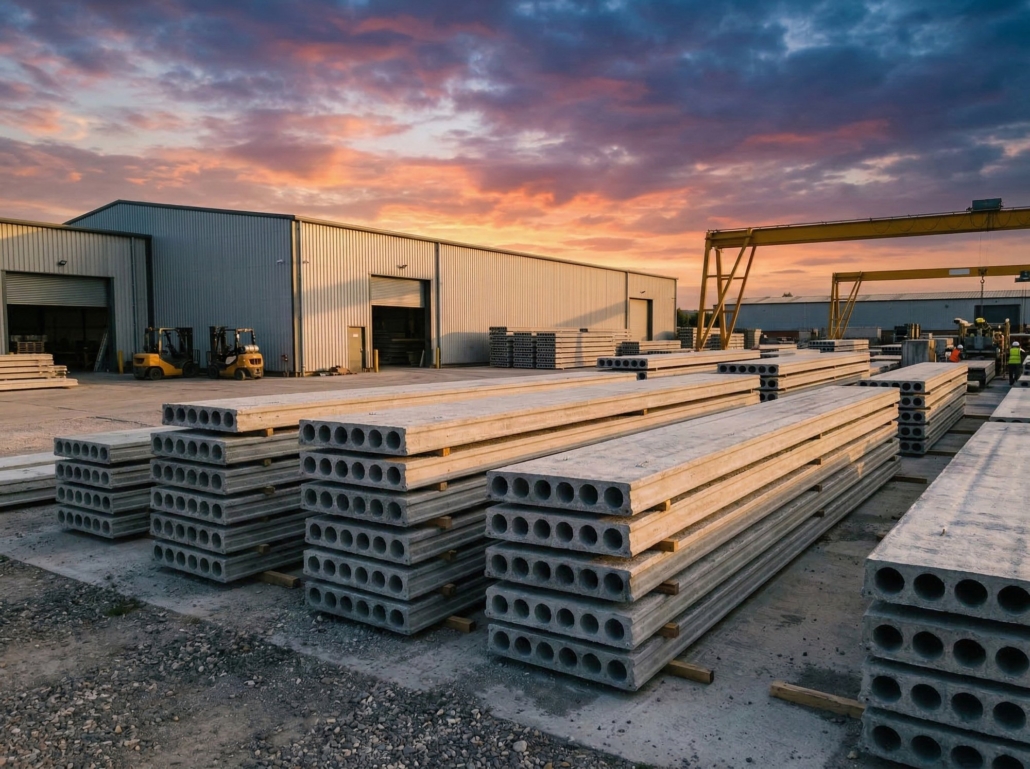
Production environment plays a significant role. A controlled manufacturing facility reduces exposure to weather delays, material variability, and labor inconsistencies. This is one reason infrastructure teams increasingly rely on off-site fabrication for time-sensitive components.
Reliable Precast Concrete Delivery and Supply Chain Transparency
A product that meets every quality standard still creates problems if it arrives late. Delivery reliability is a core element of supplier evaluation. It reflects how well a manufacturer plans, schedules, and communicates throughout the production and logistics workflow.
Evaluate a supplier's track record on lead times. Request references from past projects with similar scope and complexity. Find out how they respond to schedule changes or material shortages.
Supply chain transparency is equally critical. Disruptions happen. What matters is how a supplier communicates when they do. A dependable partner provides advance notice, proposes alternatives, and works collaboratively to protect your schedule.
Logistics coordination is another factor to consider. Does the supplier have experience delivering to constrained urban sites, staged jobsites, or phased construction programs? Delivery is not just transportation, it is sequencing, planning, and communication across multiple stakeholders.
Roman Stone: A Partner Built Around Infrastructure Quality
Roman Stone has supported contractors, utilities, and public agencies for more than a century. Our precast concrete manufacturing process combines rigorous quality standards with experienced engineering expertise. Every product is built in a controlled facility, reducing field variability and improving schedule certainty.
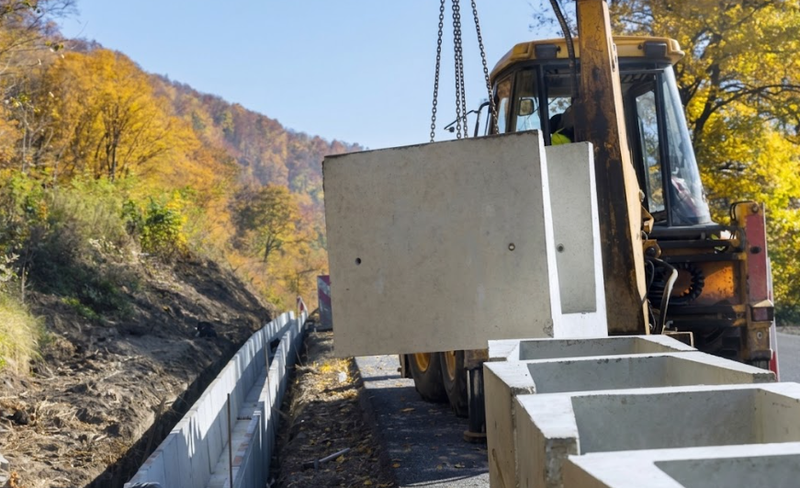
Our team engages with project stakeholders from the beginning. This approach means identifying challenges before they become delays. From duct banks and underground utility systems to coastal and marine infrastructure, Roman Stone delivers solutions designed to perform under real-world conditions.
When timelines are tight and execution risk is high, selecting the right supplier is a strategic decision. Work with a precast concrete manufacturer that has the certifications, engineering depth, and delivery history your project demands. Connect with Roman Stone today to explore how our quality-driven approach can advance your next infrastructure project.
Frequently Asked Questions
How does a precast concrete manufacturer's plant capacity affect project timelines?
Plant capacity influences how quickly a supplier can respond to order changes or increased demand. A facility with adequate throughput can absorb schedule shifts without compromising lead times or product consistency. It is worth checking the current production load and average fulfillment timelines before signing a contract.
What is the difference between quality control and quality assurance in manufacturing?
Quality control refers to the inspection of finished products to identify defects. Quality assurance is the broader system of processes designed to prevent defects from occurring in the first place. Both are necessary in a well-run manufacturing operation, and the strongest suppliers invest in each equally.

