
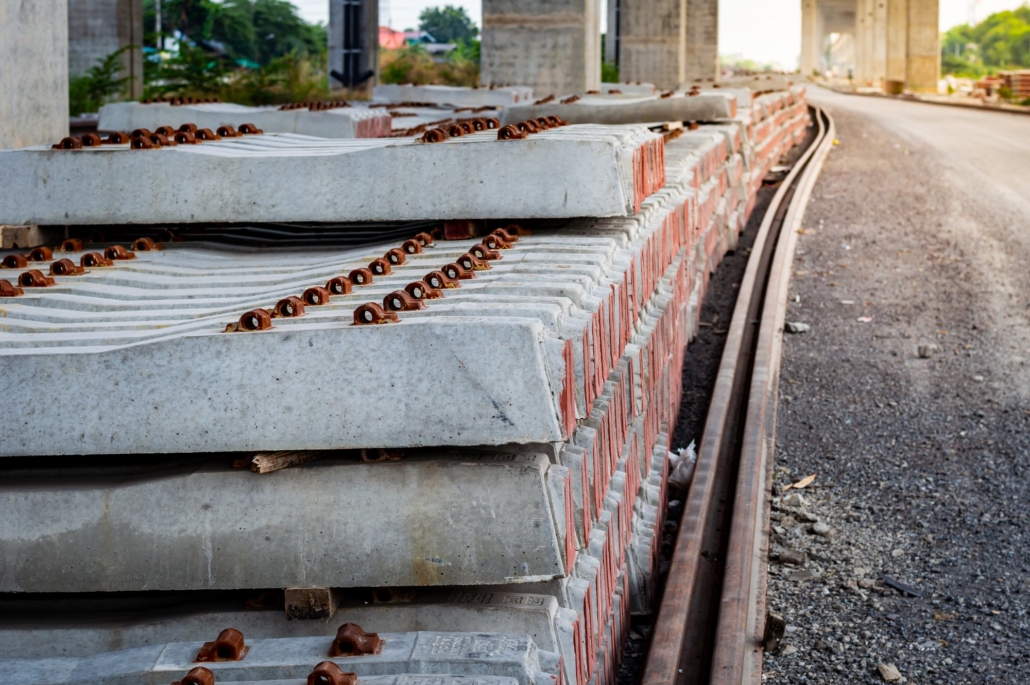
Precast Concrete Engineering in Rail Infrastructure
Rail infrastructure is one of the most demanding construction environments in civil engineering. Projects must hit strict dimensional tolerances. They must also endure heavy loads, high use frequency, and extended weather exposure. The engineering decisions made early in a rail project directly shape long-term performance and cost. Precast concrete has become a central solution in this space.
Precast solutions offer a combination of precision, durability, and schedule efficiency that on-site methods cannot always match. Understanding how different precast products function across different rail applications helps contractors and engineers make better decisions at every project phase.
Elevated Structures and Urban Transit Guideways
Rail networks in urban areas often run elevated above street level. Elevated guideways and metro viaducts require robust, lightweight structural components. Precast concrete segmental construction has become the preferred method for these structures.
Precast segmental technology offers several advantages for elevated transit builds:
- A dedicated production facility casts the segments, ensuring uniform quality before field installation.
- Precast construction minimizes on-site labor requirements, which matters greatly on congested urban corridors.
- Erection can proceed quickly, limiting disruption to traffic and communities below.
- Inspectors can inspect completed segments before they reach the structure, allowing them to identify and address defects early.
Metro projects around the world have leveraged this approach with notable results. In one urban metro build, precast construction cut the working footprint in half compared to cast-in-place methods. This was critical in areas with tight alignments and heavy transit schedules.
Tunnel Linings and Underground Rail Infrastructure
Underground rail construction presents a different set of challenges. Tunnel boring machines (TBMs) excavate the alignment, and the bore must be lined immediately behind the cutterhead. Precast concrete segmental liners serve this purpose.
Each lining ring consists of multiple curved segments. Together, they form a closed, watertight circle. The segments are cast offsite and delivered to the tunnel face in a precise sequence. Installation is fast and continuous. This keeps the TBM advancing without interruption.

The geometry of each segment is engineered to accommodate alignment curves, groundwater pressure, and soil loads. Segments are designed and tested before the tunnel drive begins. Issues identified during fabrication can be corrected before the segment enters the ground. This is a notable benefit compared to cast-in-place lining methods, where underground repairs are costly and technically complex.
Station Platforms and Rail Passenger Facilities
Rail stations face a unique constraint: construction must often take place within limited track possession windows. These windows are typically overnight and span only a few hours. Traditional cast-in-place methods cannot meet that pace.
Precast concrete platform components are designed for rapid deployment. Modular units can be set and secured within a single overnight possession. Some systems enable up to 50 meters of platform construction per nightly window. Comparable work using conventional approaches could take several weeks.
This speed advantage extends to other station elements as well:
- Canopy columns, beam frames, and staircase components can all be manufactured at the plant and delivered ready to install.
- Structural elements arrive on site with no waiting period for curing, keeping the schedule tight.
- Reduced site activity lowers risk to workers and limits interference with live rail operations.
Factory production also improves finished surface quality. Tighter curing control is achievable in a plant setting. This produces denser, more durable concrete that holds up to daily passenger traffic and routine maintenance.
Roman Stone: Precast Concrete Built for Rail Infrastructure Demands
Rail projects demand a precast supplier with more than a catalog of standard products. Engineering collaboration, scheduling reliability, and manufacturing precision all determine whether a project reaches its goals. Roman Stone brings over a century of precast manufacturing experience to infrastructure teams facing exactly these pressures.
Roman Stone's capabilities span underground structures, elevated guideway systems, and specialized civil components. Each application is approached with the same discipline: precision manufacturing, responsive service, and a commitment to schedule certainty.
When rail timelines are tight and specifications are demanding, having the right precast partner makes a measurable difference. Reach out to the Roman Stone team today to discuss how precast solutions can support your next rail infrastructure project.
FAQ
How Does Precast Concrete Support Sustainability Goals in Rail Construction?
Precise factory batching reduces on-site material waste considerably. Optimized component designs also achieve the same structural output with less material volume. Shorter construction timelines mean fewer equipment hours on the project site, which lowers the carbon output associated with the build.
Can Precast Concrete Components Be Adapted for Non-Standard Rail Geometries?
Yes. Curves, varying span lengths, and irregular site conditions can all be addressed through engineering-driven customization. Manufacturers work from detailed drawings to produce elements tailored to specific alignment requirements, load conditions, and dimensional tolerances. Custom molds and prestressing configurations make this level of adaptation achievable within standard production workflows.

