
The Future of Infrastructure: Why Smarter Construction Methods Matter
Infrastructure projects are becoming larger, faster, and more complex. From data centers and utility networks to transportation systems and critical infrastructure, project teams are being asked to deliver more while navigating tighter schedules, skilled labor shortages, logistical challenges, and increasing expectations for quality.
Meeting those demands will require more than simply building faster. The future of infrastructure construction depends on finding smarter ways to design, manufacture, and deliver the systems communities and industries rely on.
At Roman Stone, we believe that means combining proven construction experience with engineering expertise, manufacturing innovation, and greater collaboration across every stage of a project.
Infrastructure Construction Is Changing
Traditional construction methods have supported infrastructure development for generations, but today’s projects present new challenges.
Complex designs, compressed schedules, workforce constraints, and remote project locations can create uncertainty throughout the construction process. When significant portions of a project are built entirely in the field, factors such as weather, labor availability, and material coordination can add even more variables.
As these pressures increase, contractors, engineers, owners, and manufacturers have an opportunity to rethink how projects move from design to installation.
The question is no longer simply what needs to be built, but how it can be built more efficiently.
Moving More Work Into Controlled Environments
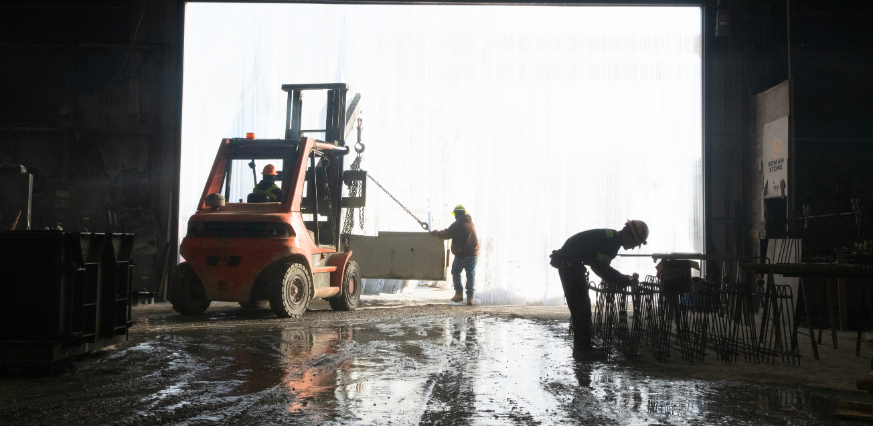
One way the industry is improving efficiency is by moving more construction activity into controlled manufacturing environments.
Engineered precast concrete allows infrastructure components to be designed and manufactured before arriving at the jobsite ready for installation. This approach can reduce field labor requirements, improve consistency, and give project teams greater predictability.
But the opportunity extends beyond precast itself.
Early engineering coordination, thoughtful manufacturing strategies, and installation planning can help identify potential challenges before they affect the project schedule. When manufacturers are involved earlier, they can become part of the problem-solving process rather than simply supplying a product.
Flexibility Is Becoming Essential
Not every infrastructure project has the same requirements.
A manufacturing and delivery strategy that works for one project may not make sense for another, particularly as infrastructure development expands into new regions and project sizes continue to grow.
That makes flexibility increasingly important.
Traditional precast manufacturing can provide significant efficiencies, while capabilities such as mobile precast manufacturing can bring production closer to projects with unique logistical or high-volume requirements.
The goal is not to force every project into the same process. It is to determine the approach that makes the most sense for the project.
Building Faster Without Sacrificing Quality
As schedules become more aggressive, speed cannot come at the expense of long-term performance.
Critical infrastructure is expected to perform for decades. Smarter construction methods must therefore balance efficiency with engineering, quality control, durability, and consistency.
Controlled manufacturing, repeatable processes, early collaboration, and thoughtful engineering can help project teams reduce unnecessary complexity while maintaining the standards critical infrastructure demands.
Ultimately, building smarter isn’t simply about completing a project faster. It’s about creating a more predictable path from concept through installation.
Building What’s Next
The next generation of infrastructure will require contractors, engineers, manufacturers, and owners to work together differently.
Manufacturers will increasingly need to serve as problem-solving partners—bringing engineering knowledge, production capabilities, logistics expertise, and real-world construction experience to the table.
At Roman Stone, more than 120 years of precast manufacturing experience gives us a strong foundation for that future. But experience matters most when it is used to keep evolving.
As infrastructure needs change, we will continue looking for smarter ways to engineer, manufacture, and deliver solutions that help our partners move projects forward.
Because the future of infrastructure isn’t just about what we build. It’s about how we build it.
