
How Precast Concrete Solutions Prevent Coastal Erosion
America's coastlines face an escalating crisis. Every year, powerful storms carve deeper into shorelines, rising tides claim more land, and aging infrastructure crumbles under relentless wave action. Traditional erosion control methods struggle to keep pace, often requiring years of construction and frequent repairs. Enter precast concrete, a manufacturing innovation that transforms how engineers defend vulnerable shorelines. By combining factory precision with marine-grade durability, precast concrete delivers coastal protection systems that install faster, last longer, and perform better than conventional alternatives.
Understanding the Forces Behind Coastal Erosion
Coastal erosion operates through multiple interconnected mechanisms. Wave energy pounds shorelines with tremendous force, dislodging sediment and undermining foundations. Tidal cycles create fluctuating water pressures that saturate and weaken soil structures. Wind-driven currents transport displaced material along the coast, leaving gaps where land once stood. Storm surges accelerate these processes exponentially, compressing months of erosion into hours.
The consequences extend far beyond lost beaches. Roads buckle as their foundations erode. Utilities become exposed and vulnerable. Saltwater intrusion contaminates freshwater aquifers. The economic and environmental toll continues mounting as weather events intensify.

The Factory Advantage: Why Manufacturing Matters
The fundamental difference between precast concrete and traditional methods lies in where and how the material takes shape. Cast-in-place concrete depends on uncontrolled job site conditions where temperature swings, humidity changes, and contamination risks compromise structural integrity.
Precast concrete reverses this equation entirely. Climate-controlled factories maintain optimal conditions throughout production. Automated batching systems measure materials to exact specifications. Extended curing periods in humidity chambers develop maximum strength before components ever reach saltwater. Quality control inspectors examine every unit, rejecting pieces that fail to meet engineering standards.
This manufacturing rigor produces concrete with superior density, reduced porosity, and enhanced resistance to chemical attack. The material arrives at coastal sites already hardened to full strength, ready to withstand immediate wave exposure.
Engineering Coastal Defense Systems
Modern precast concrete systems involve sophisticated engineering tailored to specific site conditions. Seawall panels incorporate internal reinforcement networks that distribute impact forces across entire structures rather than concentrating stress at weak points. Interlocking geometries connect adjacent units into continuous barriers that flex slightly under wave pressure, dissipating energy without cracking.
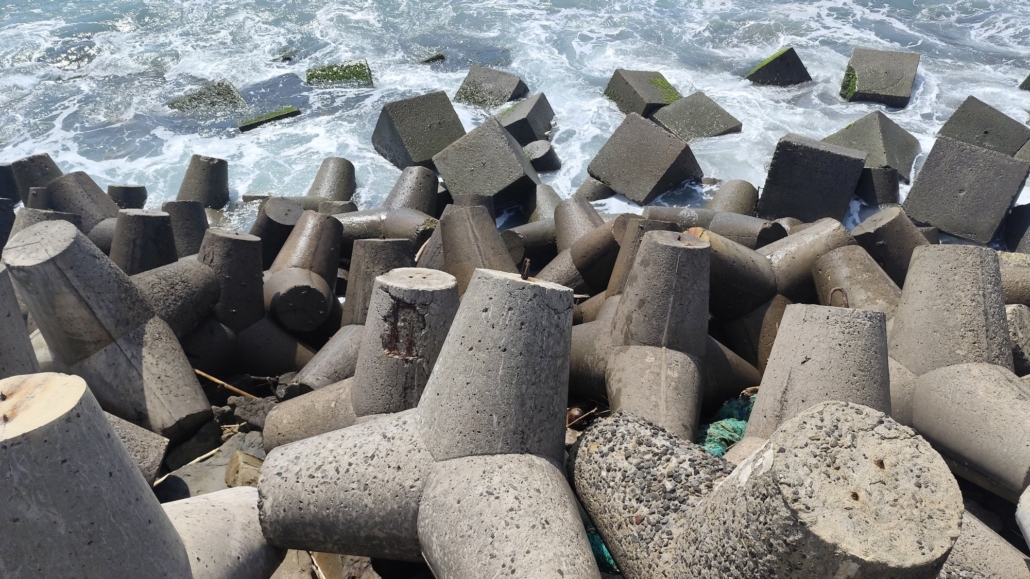
Breakwater systems use massive interlocking blocks arranged in patterns that slow incoming waves while allowing water to drain efficiently. The gaps between units prevent pressure buildup that could destabilize the structure, while the overall mass absorbs kinetic energy before it reaches the shore.
Revetment systems place precast armor units along vulnerable slopes, creating protective shells that prevent soil loss while maintaining natural drainage. These systems can be designed with features that support ecological functions, allowing marine organisms to colonize the structure and creating habitats that enhance coastal ecosystems.
Material Science for Marine Environments
Saltwater poses unique challenges that ordinary concrete cannot withstand long-term. Chloride ions penetrate porous concrete, reaching embedded steel reinforcement and triggering corrosion that expands, cracks, and ultimately destroys the structure from within.
Advanced precast concrete formulations address these threats through multiple strategies. Low water-to-cement ratios create denser matrices with fewer pathways for chloride intrusion. Supplementary materials like silica fume fill microscopic voids, further reducing permeability. Corrosion-inhibiting admixtures provide chemical protection for embedded steel.
Surface treatments add additional protection layers. Penetrating sealers chemically bond with concrete surfaces, creating barriers that repel saltwater while allowing internal moisture to escape. The result is concrete that can endure decades of continuous saltwater exposure while maintaining structural integrity.
Installation Efficiency and Timeline Benefits
Traditional coastal construction often becomes a race against tides and weather. Contractors must coordinate complex operations within narrow weather windows, risking delays that cascade through project schedules and budgets.
Precast concrete fundamentally changes this dynamic. Manufacturing proceeds year-round in controlled facilities, independent of coastal weather. Site preparation and component fabrication happen simultaneously rather than sequentially. When conditions allow, installation crews arrive with finished products ready for immediate placement.
Heavy equipment positions units with precision, guided by engineered placement plans. Within days, protective barriers that would have required months using conventional methods stand complete and functional. This accelerated timeline means communities gain protection sooner, reducing exposure to storm damage during construction.
Economic Considerations and Lifecycle Value
Initial cost comparisons often focus narrowly on material pricing, missing the broader economic picture. Construction labor represents a significant portion of coastal project costs. Precast installation requires smaller crews working for shorter durations compared to cast-in-place operations. Equipment rental costs drop when projects complete faster.
Maintenance costs diverge dramatically over time. Traditional systems may require major repairs within ten to twenty years as joints fail or sections crack. Precast concrete structures designed with proper materials can operate maintenance-free for decades. When maintenance becomes necessary, individual damaged units can often be removed and replaced without reconstructing entire sections.
Long-term resilience translates to avoided costs from property damage, emergency repairs, and lost economic activity when erosion forces closures or evacuations.

Environmental Stewardship in Coastal Construction
Protecting shorelines while minimizing environmental impact requires careful attention throughout project lifecycles. Centralized manufacturing consolidates environmental impacts at facilities designed for efficient resource use. Water used in production can be captured, treated, and reused rather than discharged into coastal waters.
Job site impacts decrease substantially when manufacturing occurs off-site. Beach and nearshore environments experience less disturbance from equipment, fewer accidental spills, and reduced turbidity from construction activities. Marine ecosystems recover faster when installation windows compress from months to weeks.
Modern precast designs can incorporate ecological enhancements. Textured surfaces encourage colonization by beneficial organisms. Tide pools cast into seawall faces provide habitat for intertidal species. The extended service life of quality precast systems means fewer replacement cycles over time, reducing the cumulative environmental burden of coastal infrastructure.
Partnering for Coastal Resilience
Effective shoreline protection demands experienced engineering, skilled manufacturing, and professional installation working in concert. Roman Stone brings comprehensive capabilities to coastal protection challenges. Our manufacturing facilities produce engineered precast solutions, including concrete mattresses that stabilize underwater slopes, armor units that dissipate wave energy, seawall panels that defend vertical faces, and custom components designed for unique site requirements.
Our mobile precast production capability distinguishes us in the industry. By establishing temporary manufacturing operations adjacent to major projects, we eliminate long-distance transportation costs and ensure continuous component supply. This approach proves especially valuable for remote coastal locations or projects requiring large component volumes.
Connect with us to explore how our innovative precast concrete solutions can safeguard your shorelines and infrastructure for the long term. Together, we'll develop a customized plan to defend your coastline and build resilience.

