
Concrete vs. the Alternatives: A Per-Unit Emissions Breakdown for Infrastructure Builders
When infrastructure builders evaluate sustainable construction, one question keeps surfacing: which material actually carries the lightest carbon load? Concrete is everywhere, covering roads, tunnels, utility vaults, and bridges, and it draws heavy scrutiny for its emissions. However, the comparison is usually misunderstood. A realistic evaluation of concrete's footprint against materials such as steel, plastic, and mass timber requires a per-unit, full-lifecycle lens.
How We Measure Concrete's Emissions
Carbon accounting for construction materials relies on embodied carbon: the total greenhouse gas emissions tied to extraction, manufacturing, transport, and end-of-life disposal. The construction sector accounts for roughly 37-39% of global energy-related CO2 emissions, with material production alone responsible for 7-11% of that share.

Concrete's main culprit is cement. The calcination process that produces clinker, the core ingredient in Portland cement, releases CO2 as a chemical byproduct, not just a fuel byproduct. That distinction makes it harder to address than simple energy efficiency improvements.
Sustainable Construction: Concrete vs. Plastic and HDPE
High-density polyethylene (HDPE) and plastic conduit systems are commonly pitched as lightweight, corrosion-resistant alternatives for underground utility systems. Their manufacturing footprint looks smaller at first glance, however, the full lifecycle picture is more complicated.
Key considerations include:
- Plastics are petroleum-derived, tying their carbon profile directly to fossil fuel extraction and refining.
- HDPE lacks the compressive load-bearing capacity of concrete, requiring more support infrastructure in heavy-load applications.
- Plastic degrades under UV exposure and ground movement, increasing replacement frequency and cumulative emissions over time.
- Concrete's longevity, often 50-100+ years in underground applications, distributes its upfront carbon cost across a much longer service window.
For buried utility systems, concrete's durability frequently makes it the lower-carbon choice when measured across the full service life.
Sustainable Construction: Concrete vs. Mass Timber
Mass timber has earned real attention as a lower-carbon structural option. A comparative lifecycle assessment found that timber buildings achieve roughly a 25% reduction in global warming potential compared to concrete counterparts. Wood products carry lower embodied energy because they skip the extreme heat processing that cement production demands.
That said, mass timber has real limitations for infrastructure applications. It is not suited for underground, submerged, or high-humidity environments. Fire resistance, moisture management, and load capacity require additional treatment and structural systems. Local sourcing also matters significantly, since long transport chains erode timber's carbon advantage. Mass timber is best suited for above-grade structural frames in buildings, not utility infrastructure, marine environments, or buried systems.
Where Precast Concrete Changes the Equation
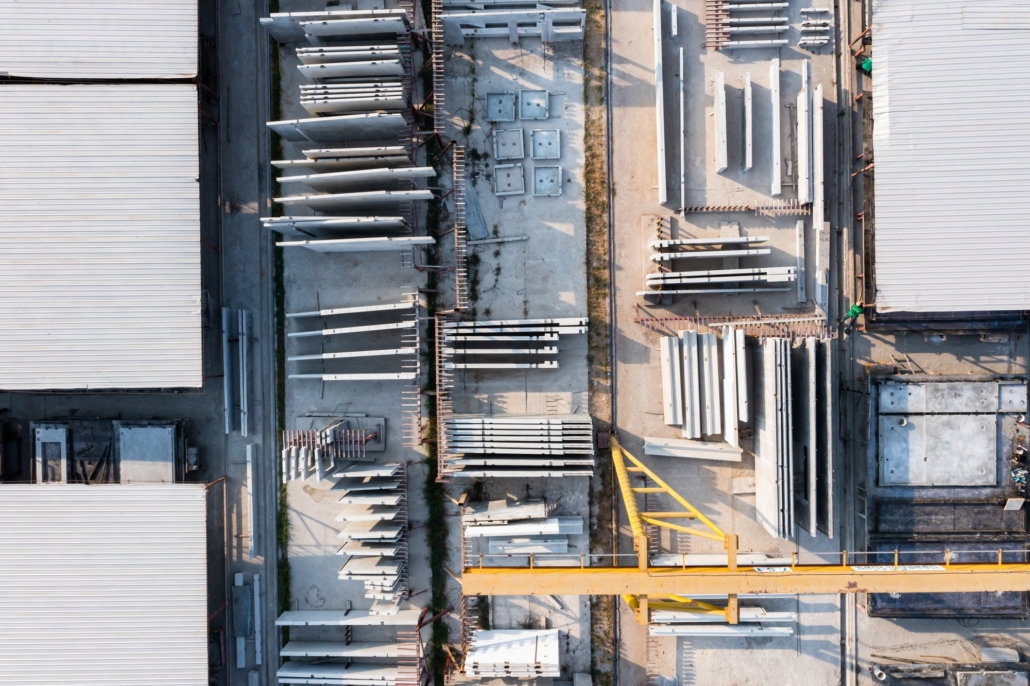
Not all concrete carries the same emissions profile. Precast concrete, manufactured in a controlled plant environment, performs meaningfully better than site-poured cast-in-place work. The reasons are measurable:
- Optimized mix designs reduce cement content per unit without sacrificing strength.
- Plant production generates less material waste than field pours.
- Faster installation cuts equipment hours on site, reducing fuel burn.
- Reusable steel forms replace single-use lumber or plywood, eliminating formwork waste.
- Fewer site visits and deliveries compress construction schedules and associated emissions.
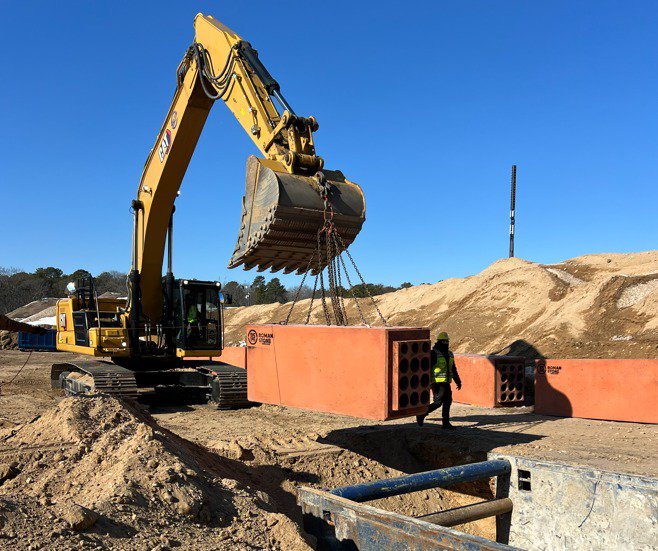
Roman Stone's EZ-Key duct bank system illustrates this approach. Precision-manufactured off-site, it reduces field labor, minimizes rework, and compresses installation timelines, making it a strong candidate for projects prioritizing sustainable construction outcomes.
What the Industry Is Doing to Reduce Concrete's Carbon Load
The concrete industry is actively cutting emissions at scale. Current strategies include:
- Replacing a portion of Portland cement with supplementary cementitious materials (SCMs) like fly ash and blast furnace slag
- Adopting Portland-limestone cement blends that emit roughly 10% less CO2
- Switching to waste-derived kiln fuels such as biomass and used tires.
Producers are also injecting captured CO2 into concrete during curing to permanently store carbon in the finished product. Hardened concrete also naturally reabsorbs CO2 over time through carbonation, partially offsetting production emissions.
Every Material Specification Is a Carbon Decision
Infrastructure builders make carbon decisions whether they intend to or not. Every specification carries a lifecycle emissions number. For underground, coastal, and mission-critical utility applications, concrete's durability and load performance make its per-unit emissions competitive over time. Precast narrows that gap further, and advances in mix design and SCMs continue to push the number down.
Sustainable construction does not require abandoning concrete. It requires specifying the right concrete, made the right way, for the right application. Connect with a Roman Stone precast specialist to understand how mix design and manufacturing approach can move your next project toward a lower-carbon outcome.
Frequently Asked Questions
Q: Does precast concrete produce fewer emissions than cast-in-place concrete?
Generally, yes. Precast manufacturing in a controlled plant environment allows for optimized mix designs, tighter quality control, reduced material waste, and more consistent curing. Reduced on-site construction activity also lowers construction-phase emissions.
Q: How do I compare the carbon footprint of concrete against other materials for a specific project?
The most reliable approach is to obtain Environmental Product Declarations (EPDs) for the materials under consideration and compare them on a per-functional-unit basis rather than a per-kilogram basis.
Q: What is Roman Stone doing to reduce the embodied carbon of its precast products?
By utilizing an NPCA-certified facility to remove inefficiencies and material waste, Roman Stone ensures lower per-unit carbon impacts. Furthermore, the company refines its mix designs to lower cement requirements without sacrificing structural integrity, integrating supplementary cementitious materials as needed to meet performance standards.
