
Underground Infrastructure: The Complete Guide to Precast Concrete Vaults
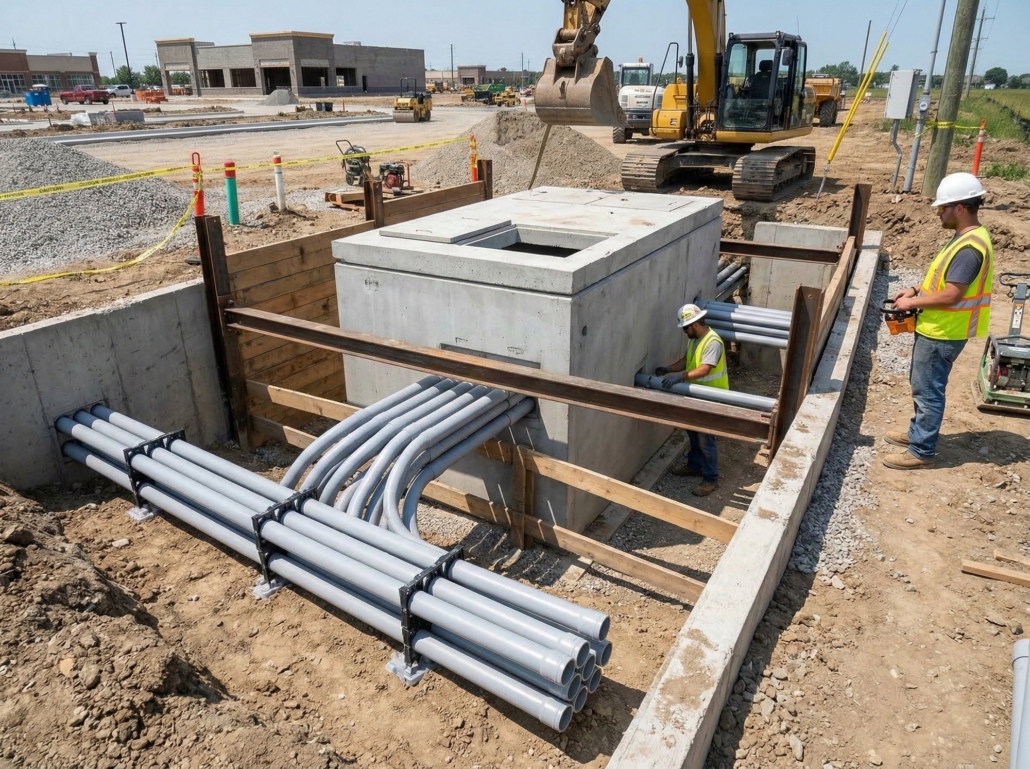
Modern infrastructure depends on invisible systems—and increasingly, on the engineering solutions that enable them. Beneath roads, utilities, and facilities lies a critical network of underground conduits, chambers, and access points. Precast concrete vaults form the structural backbone of this subsurface ecosystem, serving as engineered solutions for cable management, utility distribution, equipment housing, and maintenance access across telecommunications, power, water, and transportation sectors.
These systems must balance competing demands: load-bearing capacity for surface traffic, corrosion resistance in demanding environments, dimensional precision for tight installation windows, and lifecycle durability measured in decades. For infrastructure planners, engineers, and delivery teams, precast concrete vaults represent both a technical specification and a strategic decision that affects project cost, schedule, and long-term operational reliability.
Understanding Precast Concrete Vaults
Vaults are engineered to house and protect underground systems. These include electrical transformers, circuit breakers, telecommunications hardware, and control panels. They also function as access points for inspection and upkeep of buried utilities.
The production process follows strict industry standards. Most vaults conform to ASTM C857 and C858. These specifications govern underground precast concrete utility structures. Each unit must satisfy load, strength, and durability requirements before it reaches a job site.
Where Precast Concrete Vaults Are Used
Precast concrete vaults serve a wide range of infrastructure sectors. Their adaptability makes them a go-to solution across both public and private projects.
Common applications include:
- Electrical and utility systems. Housing transformers, switchgear, and circuit protection components
- Telecommunications and data networks. Protecting fiber optic cables, pull boxes, and splice connections
- Water and wastewater systems. Enclosing valve assemblies, meters, and flow control mechanisms
- Transportation projects. Supporting signal systems, lighting controls, and drainage infrastructure
- Data centers and mission-critical facilities. Providing secure enclosures for high-value electrical systems
- Coastal and marine environments. Withstanding hydrostatic pressure and saltwater exposure
Why Precast Outperforms Cast-in-Place Concrete
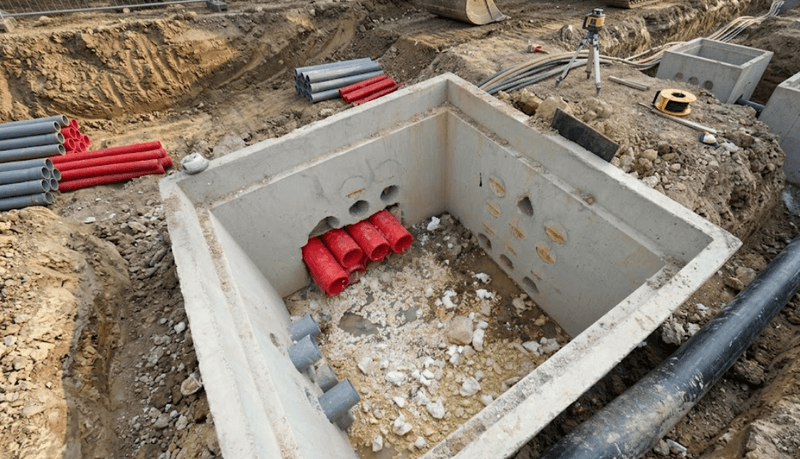
The comparison between precast and cast-in-place concrete comes up on nearly every infrastructure project. For underground vault applications, precast consistently delivers superior outcomes.
Quality control is one significant advantage. Precast vaults are cast in climate-controlled facilities. Trained crews monitor every mix, pour, and cure cycle. The result is consistent concrete strength, typically 4,000 to 5,000 psi, across every unit produced.
Weather is a major source of delays on any job site. Cast-in-place concrete requires favorable conditions for adequate curing. Precast eliminates that variable entirely. Units arrive ready to install, regardless of on-site weather.
Installation is also far more efficient. Crews can set a precast vault in a fraction of the time needed to form and pour one in place. This reduces labor hours and shortens the schedule on time-sensitive builds.
Precast concrete also strengthens over time. Unlike other material options, it does not corrode in groundwater environments. This durability makes it well-suited for below-grade installations where moisture is a constant concern.
Key Design and Installation Factors
Getting the most from a precast vault starts long before it arrives on site. Attentive planning and sound installation practice are both essential to long-term performance.
Structural loading must be assessed early. Vaults installed beneath roadways or parking areas face traffic loads far beyond those in pedestrian zones. The design must account for both dead loads and dynamic forces.
Access and clearance requirements influence vault sizing and configuration. Maintenance crews need sufficient space to inspect hardware, replace components, and exit safely. Ladders, hatches, and fall protection must all factor into the specification.
Sealing and waterproofing are non-negotiable. Joints between vault sections, conduit penetrations, and lid connections are all potential entry points for water. Thorough treatment at every interface prevents infiltration and protects sensitive systems.
Future adaptability should also inform the specification. Infrastructure needs evolve. A vault that can accommodate upgraded systems or additional conduit entries will deliver greater value over its service life than one sized only for present demands.
Partnering With Roman Stone for Underground Vault Solutions
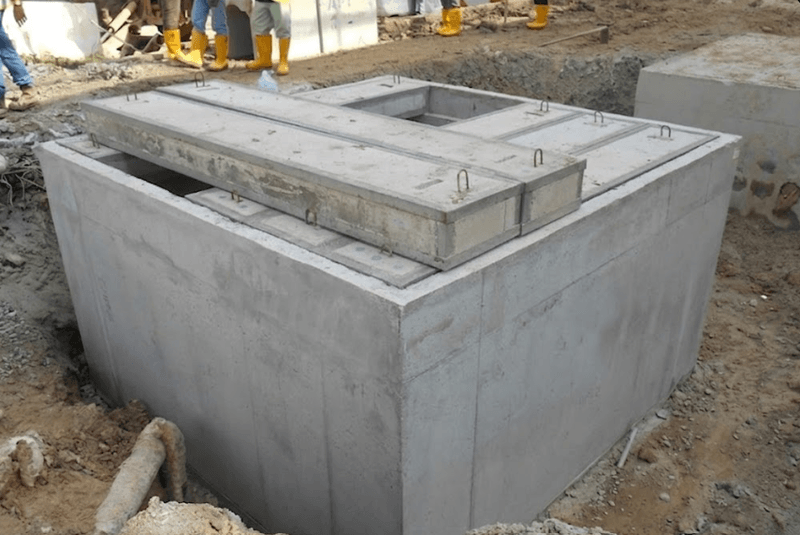
Precast concrete vaults represent a mature, proven technology—yet their performance depends entirely on quality of manufacture, proper installation, and site-specific engineering. Whether you're specifying vaults for utility distribution, telecommunications infrastructure, or transportation systems, the decision to invest in precast solutions pays dividends through accelerated construction schedules, consistent quality control, and predictable long-term durability.
The real competitive advantage lies not just in the product, but in partnering with manufacturers who understand your project's constraints: load requirements, environmental conditions, dimensional tolerances, and delivery logistics. A vault that arrives on schedule, fits with minimal field modifications, and performs reliably for 50+ years transforms project economics.
Ready to integrate precast concrete vaults into your next infrastructure project? Roman Stone brings over a century of engineering expertise and proven manufacturing capability to utility, telecommunications, and transportation applications. Whether you're planning specifications, evaluating vendors, or troubleshooting installation challenges, our team can help you optimize performance and cost.
Let’s connect to discuss your vault requirements and discover how precast solutions can accelerate your project timeline while ensuring long-term reliability.
Frequently Asked Questions
What is the difference between a utility vault and a manhole?
A utility vault is a larger enclosure designed to house equipment such as transformers, switchgear, or telecommunications hardware. A manhole is a smaller access structure that provides entry to underground conduits or pipelines. Vaults prioritize interior working space; manholes prioritize passage.
How long do precast concrete vaults typically last?
With proper installation and maintenance, precast concrete vaults can last 100 years or more. Concrete gains strength over time, and its resistance to moisture and corrosion makes it one of the most durable materials for below-grade applications.
Can precast concrete vaults be customized for non-standard projects?
Yes. Precast manufacturers can adjust dimensions, wall thickness, reinforcement layouts, penetration locations, and lid configurations to meet specific project needs. Custom designs are common in mission-critical, coastal, and high-load traffic environments.
